Burlingame makes changes to accommodate growing student population
Burlingame has more classes, staff, and students than ever before. To handle the growth, the school made several infrastructural and organizational changes over the summer. According to Principal Jen Fong, the student population has increased from 1,400 to 1,640 over the last four years.
The biggest infrastructural change was the completion of the new school gym. In addition to restoring the space for the school’s sports teams, the gym includes new areas for dance and yoga, a weight training room, and locker rooms. The weight training area moved out of the cafeteria, and the portables that once served as locker rooms were converted into classrooms to expand instructional space.
While the school has previously considered changing the portables — or even removing them to make space for tennis courts — those decisions don’t fall within the school’s authority.
“I’ve been asking for more classrooms for years, and then the approval of a portable isn’t within the district’s control. It’s within the state’s control with the Division of State Architects,” Fong said. “So we had to wait for them to tell us whether we could do it, and we also had to be sure that we were finishing the gym and being able to open the gym so we wouldn’t need the locker rooms or the P.E. office.”
Evelyn Du
Classroom sharing
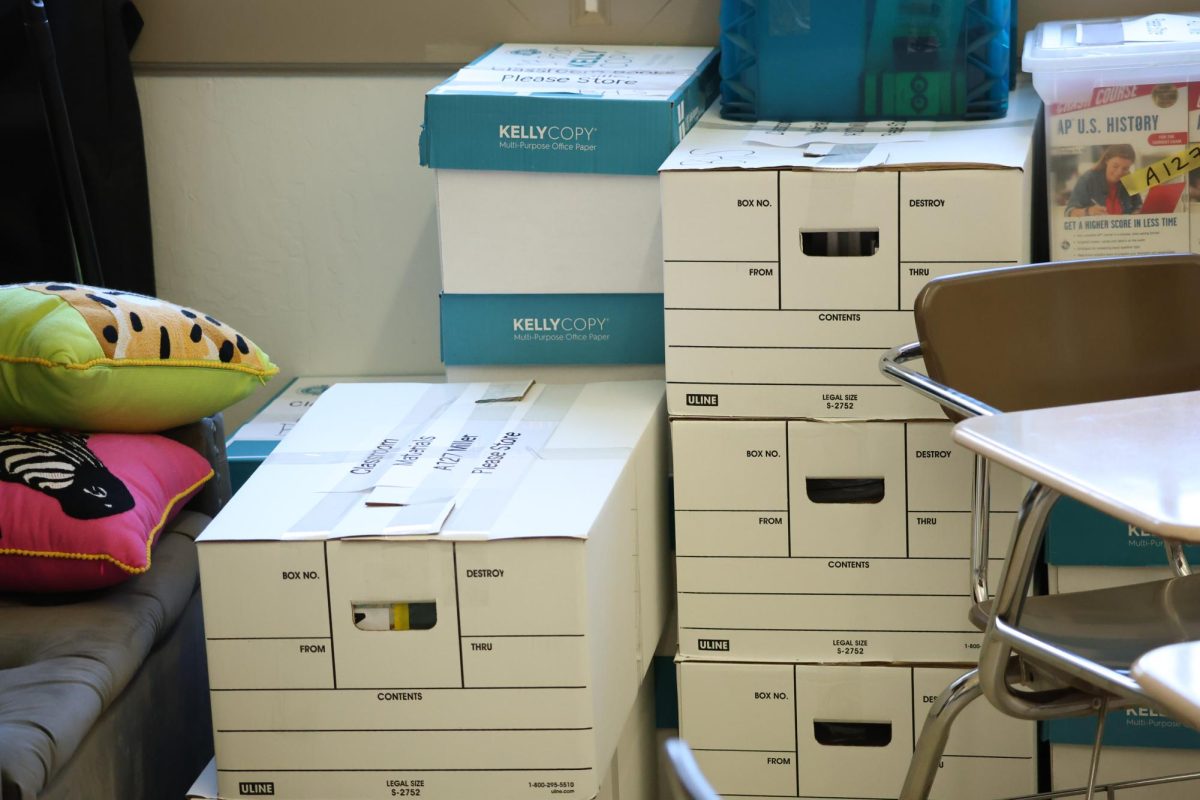
The portables are home to three new staff members — Kayla Wagonfeld, Julian Cowan-Byrns, and Abigail Wolfenden — who joined Burlingame this school year, along with 15 other faculty members. Due to the influx of new staff, more teachers are sharing classrooms, alternating based on class period.
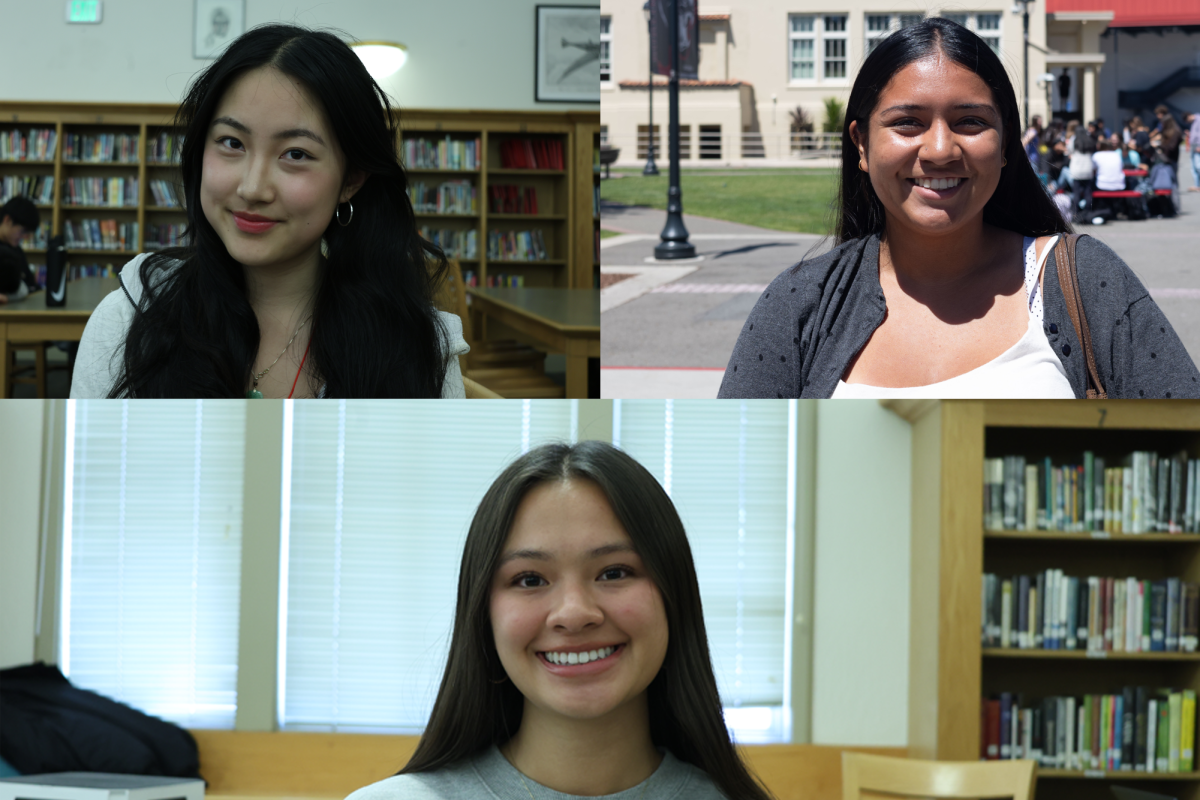
For English teacher Brian Clack, who shares room A106 with English teacher Bethany Li, not having a permanent classroom means finding other places to work during his off periods, which he said can be inconvenient at times.
“I kind of like having a more grounded spot, so setting up and finding new places to work, and only being able to work on the laptop, sometimes it definitely eats into your productivity,” Clack said. “But that’s not necessarily something that I am complaining about so much as it’s just a factor that we’re dealing with here with the student population growing.”
On the other hand, the arrangement has helped Clack stay more on top of the cleanliness and organization of his shared classroom.
“Whereas last year, if it’s just me in here and things get a little messy, I’m like, ‘Well, I’m the only person who really has to navigate that.’ So it adds an incremental layer,” Clack said. “But quite honestly, it’s a good one for me, because it forces me to be a little bit more organized. Stay on top of things in the room, not let stuff pile up.”
Health teacher Malcolm Davis also moves around campus, teaching first-period On-Site Credit Recovery (OSCR) in D125, sharing D105 with health and physical education (P.E.) teacher Arturo Zaraza, and going to the gym to teach Unified P.E. Davis said that while the situation is reasonable, it has occasionally created challenges.
“If anything, it’s more so that I wish I had a spot for all my P.E. stuff in the gym so I wouldn’t have to transport it from here to that over that way, because it’d be kind of tough to carry everything sometimes,” Davis said.
Office space compromises
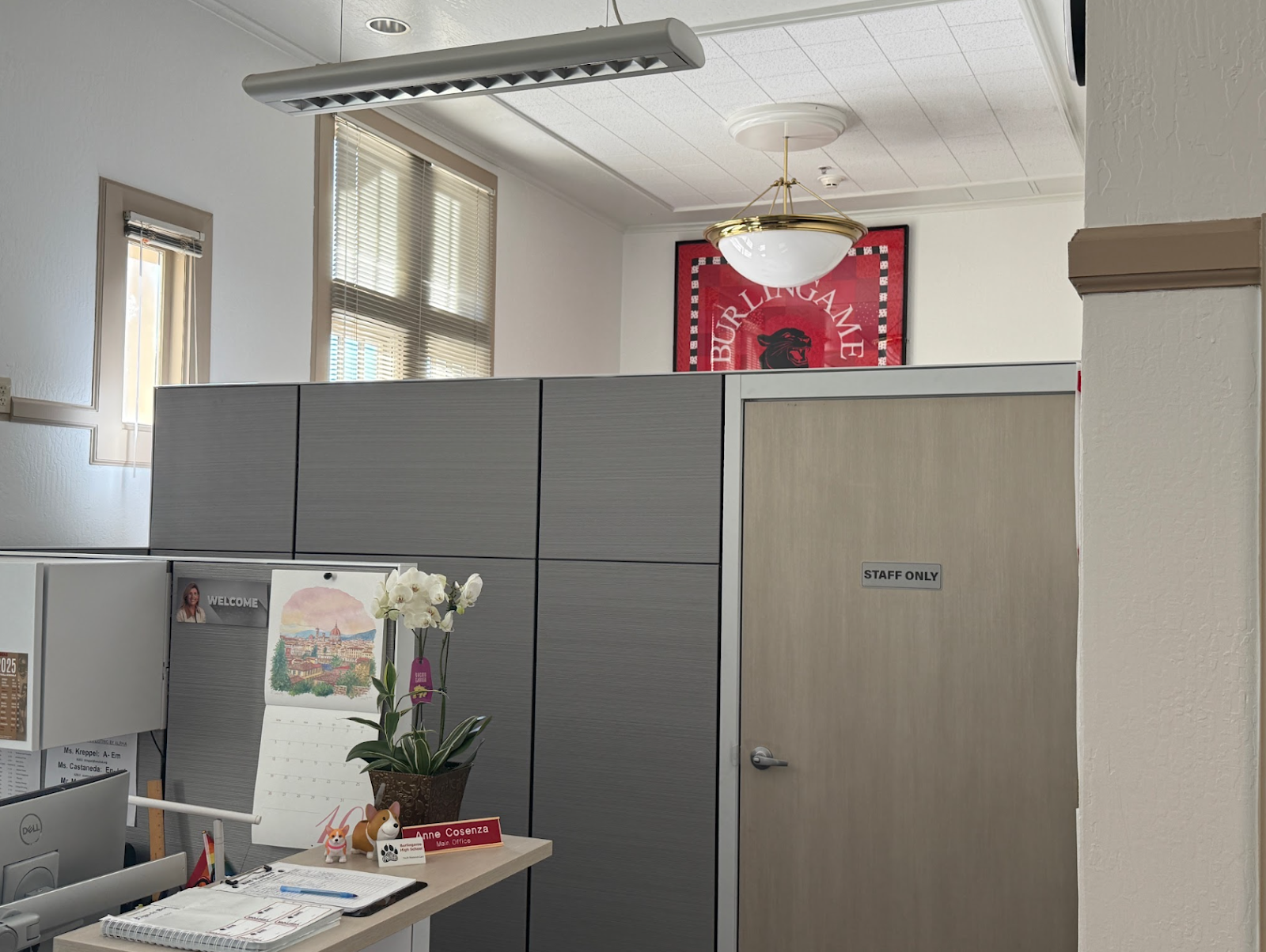
Some rooms have been shifted and repurposed. After the introduction of a fifth counselor, Alba Castaneda, the wellness counselor who had previously been in the counseling office joined the other two wellness counselors in A134. Accountant Nancy Marty was relocated to A209, and the two staff members in A209 were moved to the main office and the C building. A124 was converted into a conference room, and the attendance office moved to the main office. With the main office now accommodating five people instead of three, movable walls were installed to partition off different working spaces.
For family engagement counselor Gina Vannini, who worked in A209 for the past decade, this change meant less privacy during parent meetings.
“If I am interviewing parents and there are sensitive things they are telling me, it’s public. This space is nice — I don’t mind that — it’s just privacy,” Vannini said.
Vannini also often decorated her space to make students and families feel welcome during counseling sessions, a task made harder by the smaller office arrangement.
“I like to decor, to welcome them, and there is no space yet,” Vannini said. “Also, sometimes I have the father, the mother, and me, they bring another kid, and if I am interviewing, this space is going to be very crowded.”
Expanded course offerings
A final dimension of growth is the creation of new classes. These include Community and Literacy in Action in the English department, Vocal Jazz, Algebra 2 with Financial Applications, Dance, and Advanced Digital Photography. The new photography class required the most reorganization: A206, previously a computer lab, was converted into a photography lab. In addition, Vocal Jazz was added in part because of increased Visual and Performing Arts funding from California’s Proposition 28.
“With that extra money, we can have additional sections. And one of the goals that we have as a school is to increase the number of two-year CTE, or career technical education, pathways that we have,” Fong said. “It gives a student a chance to take a beginning course like photography, and then if we add the advanced photography, then they’re gaining additional skills after their foundational course.”
Student and staff perspectives
Despite the many space compromises this year, Fong does not expect the school to have much more room for new teachers, classes, or students.
“I don’t think we really have capacity for many more. So if students had rights to Burlingame High and we kept increasing, it would be very difficult,” Fong said. “A lot of teachers are already sharing their room, and a lot of teachers have two rooms. So it’s definitely a resource challenge. It’s a major stress to not have your own classroom.”
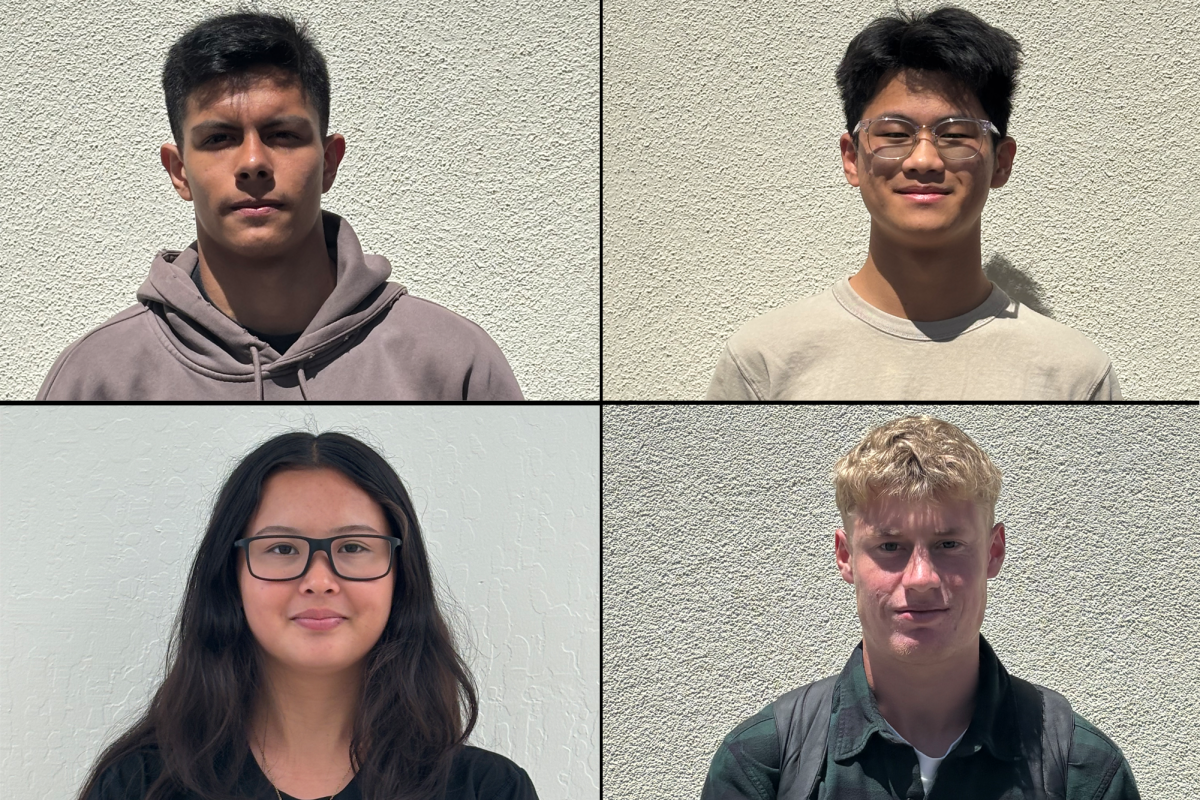
Additionally, junior Pranav Bajaj said that while the classrooms are adequately sized, the campus can feel overpopulated during lunch or break periods.
“During lunches or breaks in the quad, it does feel a bit crowded because the design of our school and the A building and the C building opposing each other squeezes people into the quad area,” Bajaj said.
At times, this can make it difficult to navigate campus, Bajaj said.
“Sometimes the hallways and ramps in the A building get pretty congested when the bells ring for passing periods, lunch break times, etc. Our lunch system, I can’t imagine what it would be like to just have our cafeteria as the main spot to get lunch. But even with two places, it’s still pretty crowded.”
Evelyn Du
On the other hand, junior Rishabh Purwar said he did not think crowding was a major issue and that the school would not be better off with fewer students.
“Honestly, I feel like the school has enough amenities and enough resources that we’re able to handle a number of students. And while it does look like it can be a little bit crowded at the breaks we have, it’s not really a problem, and it doesn’t really matter to me,” Purwar said.
While Fong has had to make many rearrangements to accommodate the increased population, she is optimistic about the progress that has been made.
“I’m glad that we’re in such a great district that is able to find money to be responsive to something like an increase in student enrollment. Burlingame High is pretty impacted. We can’t really increase our footprint that much,” Fong said.
Clack, too, said he sees many benefits to the school’s growth.
“Growth is the key for opportunity. Whether it’s new teaching jobs, whether it’s possibilities for new classes, like institutions and locations of academic institutions where things are growing, it just creates opportunity,” Clack said. “It feels very vibrant here. It feels like an active and growing and like incredibly positive place to be, which it always has. And that kind of manifests itself in this growing student population, but it enhances that feeling for me anyway.”
Your donation will support the student journalists of Burlingame High School - CA. Your contribution will allow us to purchase equipment and cover our annual website hosting costs.