





































Warning: this review contains spoilers.
You wake up on a spaceship. Why are you there?
That’s all Dr. Ryland Grace (Ryan Gosling) has to work with at the beginning of “Project Hail Mary,” directed by Phil Lord and Christopher Miller, who also made “The Lego Movie” and “21 Jump Street.” Based on the novel by Andy Weir, “Project Hail Mary” opened on March 20, earning $141 million globally and $80.6 million domestically on its opening weekend. It is only the second non-sequel and non-franchise film to open with over $80 million domestically in the past decade, joining Christopher Nolan’s “Oppenheimer.” Before opening day, the film drew an overwhelmingly positive reception from critics, and currently holds a 95% rating on Rotten Tomatoes and an 8.5/10 on IMDb. It has received praise for its blend of sci-fi comedy and space epic, as well as its striking visual elements.
The movie follows Dr. Grace as he navigates his amnesia aboard a spaceship light-years from Earth, slowly recalling why he is there. He eventually remembers he is on a mission to stop a strange microorganism called “astrophage” from dimming the sun and drastically affecting Earth’s population. About half of the runtime consists of flashbacks to Grace’s time on Earth before the mission, as both he and the audience piece together the events that led him to wake up with practically no memory from home.
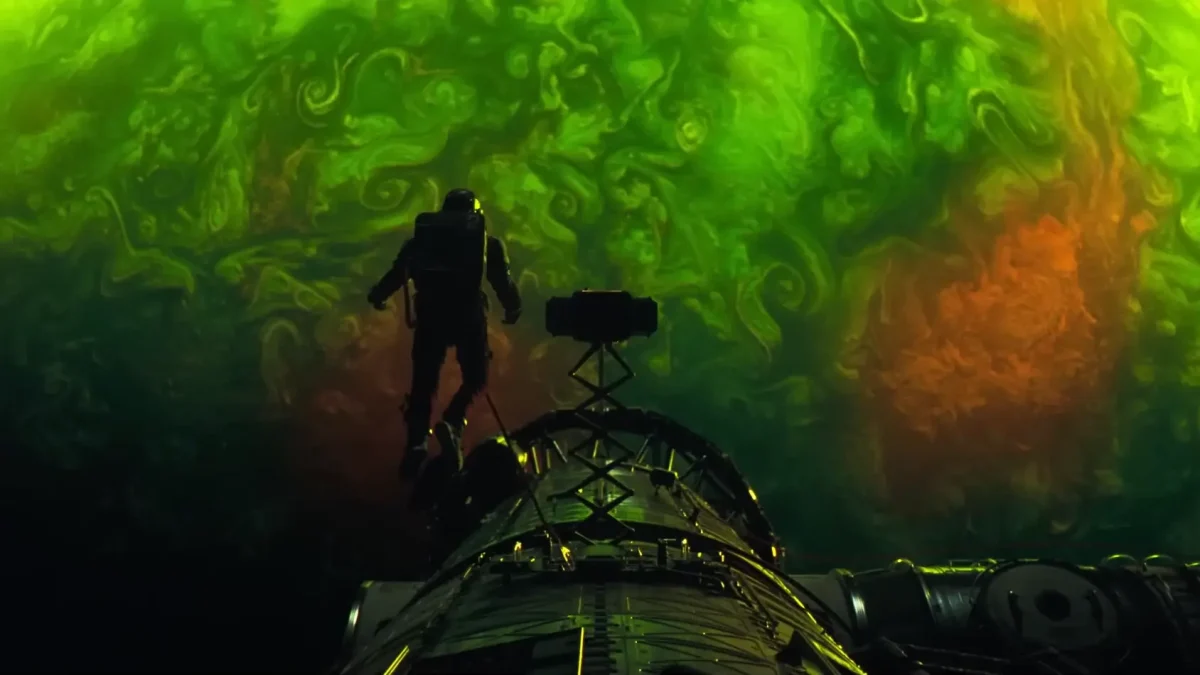
The film’s most striking aspect is its use of grand visuals and sound to evoke emotion in the audience. This occurs in both happy and sad moments, and for what subtlety these scenes may have, the sadness or happiness evoked is never subtle. In one particular scene, Grace is on a spacewalk and looks at a planet in a galaxy light-years from the Milky Way. The planet is beautiful, and the film encourages the audience to take it in the same way Grace does.
The haunting visuals also add to the film’s emotional weight, such as when deceased bodies are symbolically buried as they are pushed out into the vacuum of space to float for eternity. In a movie centered on discovery and the unknown, the heightened focus on how stunning such a journey is adds to the appeal.
The emotional intensity does not come only from the visual elements. Performances by Gosling and his co-stars, including Sandra Hüller as Eva Stratt, perfectly balance the film’s dramatic and comedic elements as actors tap into their characters’ central traits to set both humorous and serious tones. The tonal shift in some of these scenes is never jarring or out of place, helping the film’s flow. Despite its lengthy runtime, this aspect ensures you are never bored. Gosling, in particular, brings both the likability of his previous roles and the emotional depth of someone unsure of his place in the world.
The crux of this emotional depth comes from Dr. Grace’s unexpected encounter and subsequent friendship with an alien he meets on his journey. Their dependency on each other, both for the sake of their mission and emotionally, drives a majority of the film. As a viewer, this is what made me love the movie and helped me connect with it. The bond they develop in such a dire situation is beautiful, and the comedic moments as they interact bring a charm to the relationship.
“Project Hail Mary” is monumental in both the stakes the story presents and its grandeur on screen. The film’s emotional depth stays with the audience after they have absorbed the intrigue and mystery of Dr. Grace’s mission. It’s everything you’d want from a blockbuster and space epic, and ultimately an entertaining and fantastic movie.