







































On Nov. 4, voters across California will decide on Proposition 50, which would allow state legislatures to gerrymander congressional districts, potentially impacting upcoming congressional and presidential elections. Early voting began on Oct. 7, and polls will close on Nov. 4. The final results are expected Dec. 12. According to the California Democratic Party, the initiative is a response to gerrymandering in Texas, which could add five new Republican seats to the U.S. House of Representatives.
Gerrymandering is the process of intentionally redrawing districts to influence the outcome of votes. Currently, California is divided into 52 congressional districts, one for each California House member. Districts are typically redrawn every 10 years by an independent commission following the U.S. census to keep districts proportionate to the state population. As of now, California has 43 Democratic seats and nine Republican seats in the House.
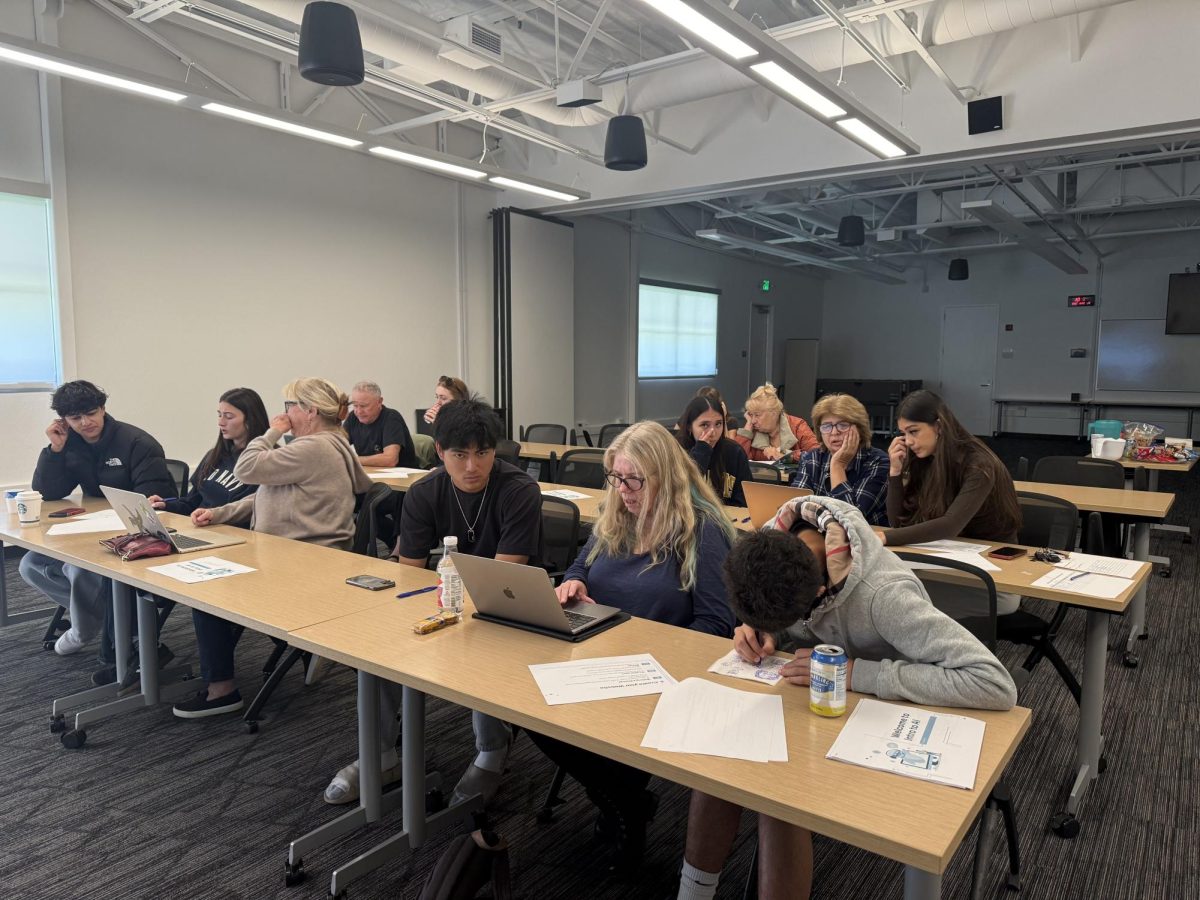
At Burlingame, the issue has drawn attention from students and staff, including government teacher Alexandra Gray, who said it is valuable for students to see class topics reflected in real political events.
“As a government teacher, I think it’s extremely important. As a citizen, I think it’s very important, the makeup of Congress, Gray said. “Which political party has the majority of seats in Congress is a huge determining factor in what legislation is going to get passed.”
Proposition 50 would allow state legislatures to redraw districts for the 2026 and 2030 congressional elections and the 2028 presidential election. According to Ballotpedia News, proposed maps from demography firm Redistricting Partners and state legislatures predict the 1st, 3rd, 22nd, 41st, and 48th districts could shift from Republican to Democratic. However, this result is uncertain because voters in each district would still need to vote on their representatives.

Senior Anya Malhotra, who registered to vote as soon as she turned 16, said she wants to use her vote to support the nation’s democracy.
“This issue does mean a lot to me, because I think that for Prop 50, it’s not necessarily something I want to be voting yes on because I do want citizens to be in control of redrawing and I don’t want politicians to be,” Malhotra said. “But I am voting yes on it, because we’ve seen Republicans in states like Texas redraw their district lines. And I think it’s leveling the playing field if Democrats in California do the same thing.”
According to American Progress, Gov. Gavin Newsom proposed Proposition 50 to counter the five new Republican districts in Texas, which Texas Gov. Greg Abbott approved on Aug. 23 after pressure from President Donald Trump in July. Senior Rowan Maher plans to vote in the upcoming special election and said he is interested in how Congress interacts with the president.
“Trump asking Texas to redistrict to get five more seats in the House, it’s honestly disgusting, because he’s essentially trying to control his impeachability,” Maher said. “If the impeachment process starts in the House and he establishes a majority in there. He’s setting grounds for him to continue to do more unconstitutional stuff.”
Newsom is one of the most vocal supporters of Proposition 50. He first publicly shared his plans for the measure in an Aug. 1 post on X and Facebook, which Axios reported was written in all caps to mimic Trump’s online style. Newsom wrote, “CALIFORNIA WILL NOW DRAW NEW, MORE “BEAUTIFUL MAPS,” THEY WILL BE HISTORIC AS THEY WILL END THE TRUMP PRESIDENCY (DEMS TAKE BACK THE HOUSE)”
Newsom then signed the Election Rigging Response Act on Aug. 21, officially introducing Proposition 50. In a statement on his website, he said, “Californians have been uniquely targeted by the Trump Administration, and thanks to the hard work of the California legislature, they will have a choice to fight back — and bring much needed accountability to Trump’s efforts to undermine the democratic process.”
According to Gray, California is just one part of a larger gerrymandering effort that includes states like Missouri, New York, and Florida. She said most attention is focused on Texas and California because their size gives them more influence in the House. However, Gray added that if multiple states are willing to gerrymander to offset each other, it could set a dangerous precedent.
“This could end up setting the precedent for mid-decade redistricting and just making gerrymandering much more common, instead of only once every 10 years. And so I do think that that could potentially be negative and add even more politics into our redistricting process,” Gray said.
For Malhotra, learning about these topics in her government class has helped her understand her role in the current political climate.
“It feels both parts very interesting, because political science is something I want to research, and just having the entire world having the country be my research zone right now, is interesting to me,” Malhotra said.“But it’s also scary, because when you’re in classes like gov, you can see patterns from decades or years in the past, and you can see mistakes that we should have learned from still be present nowadays. So it’s both parts interesting and scary.”