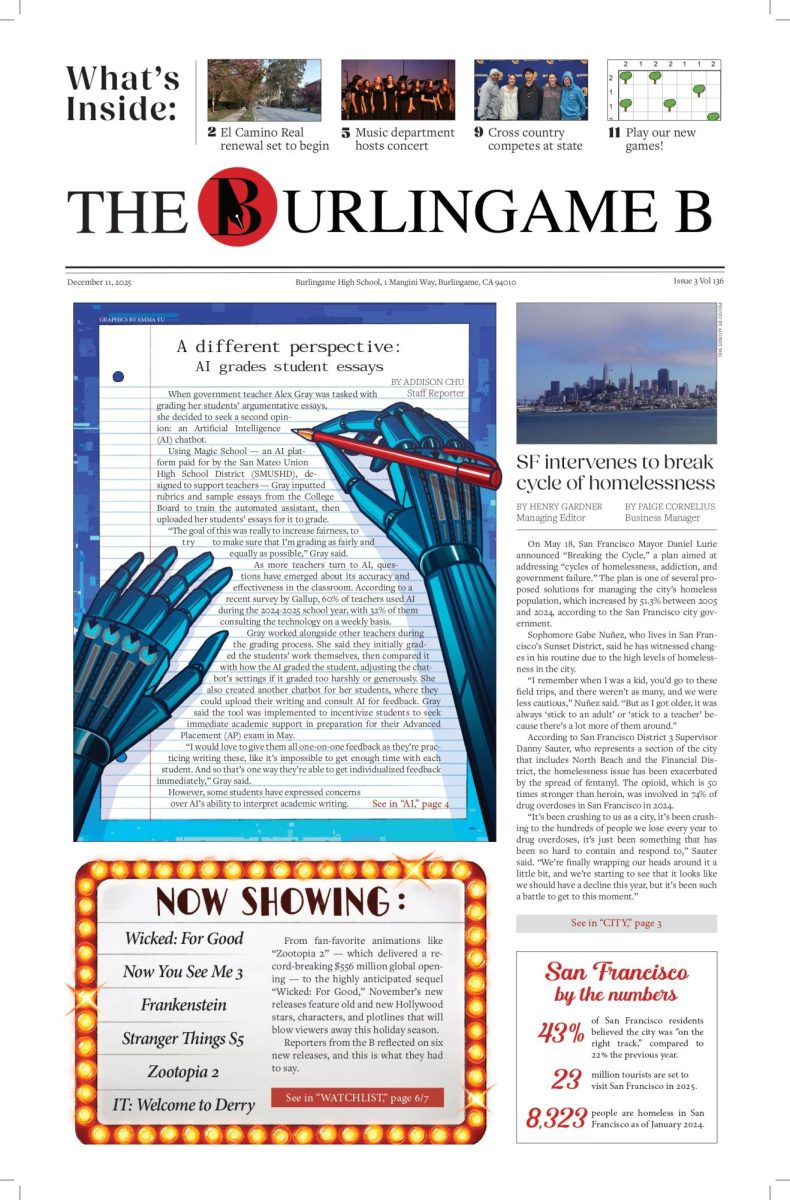


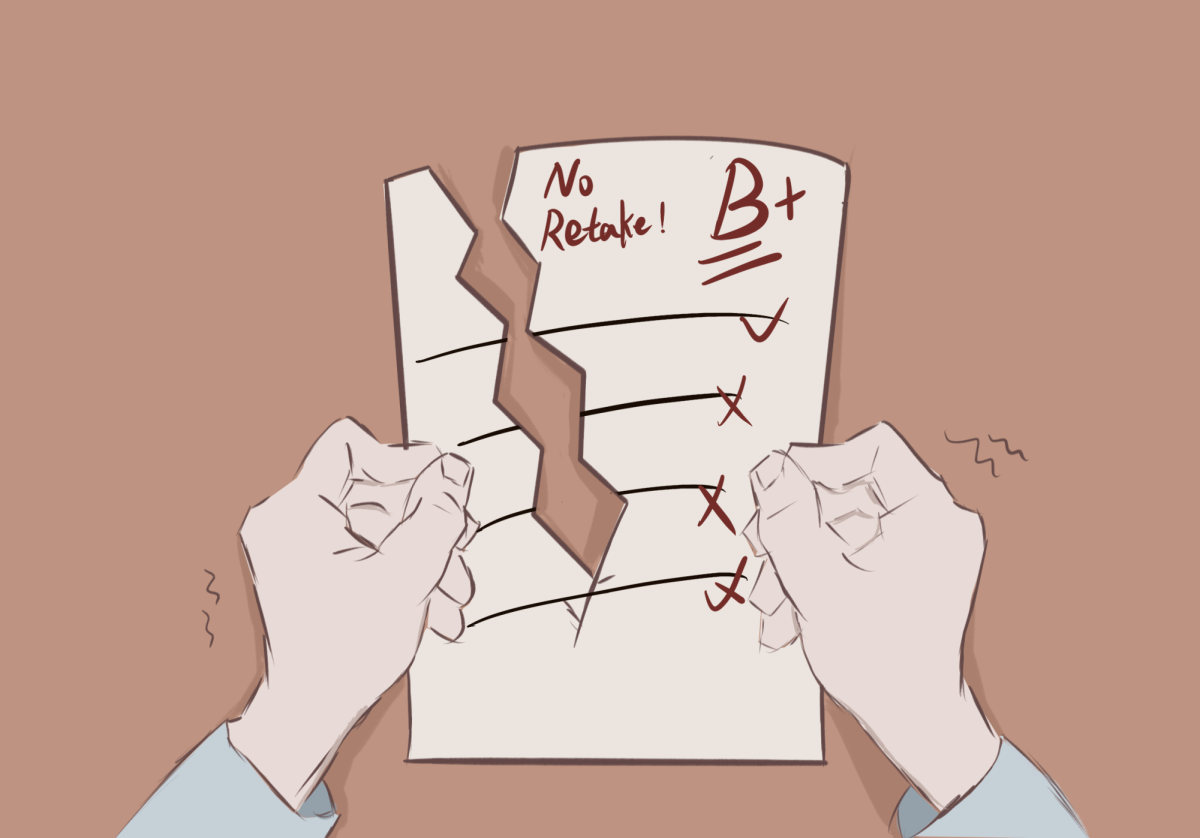





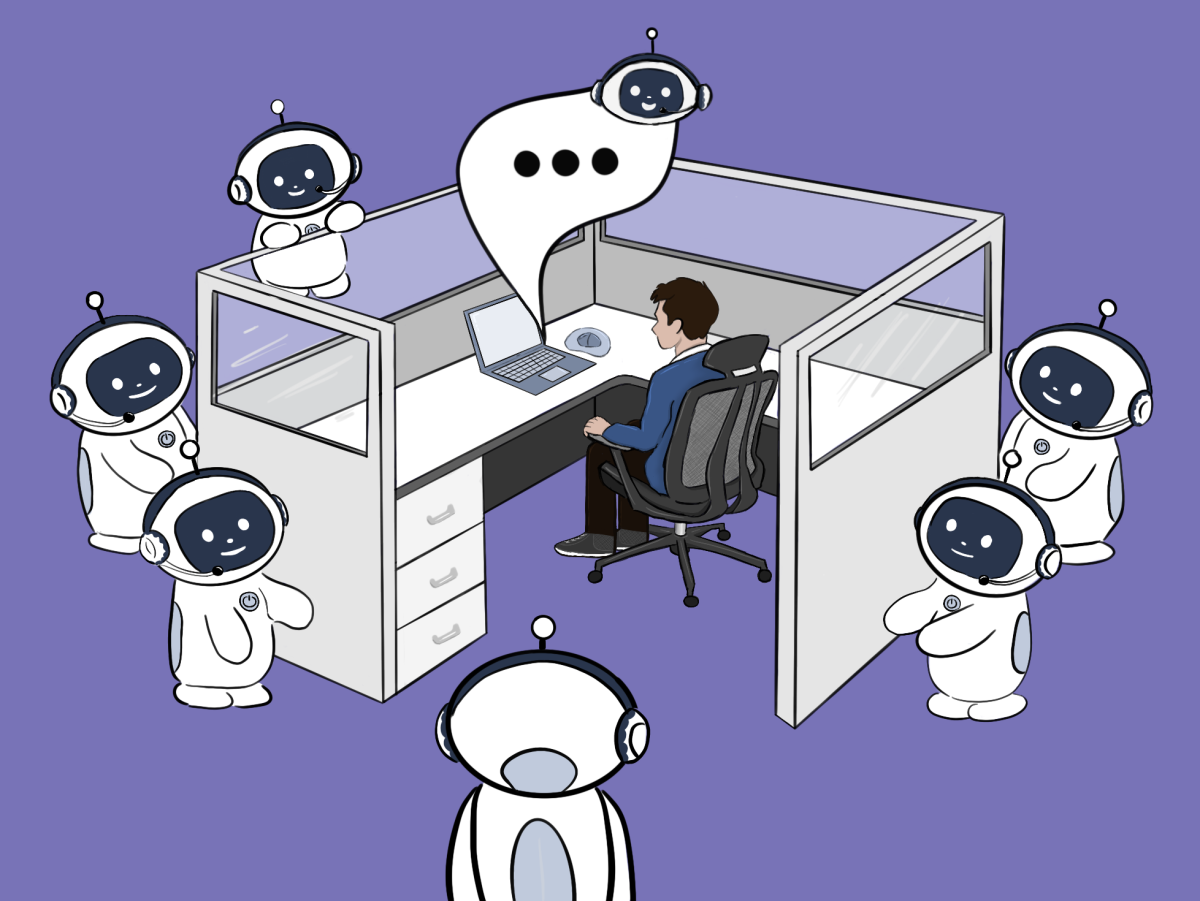















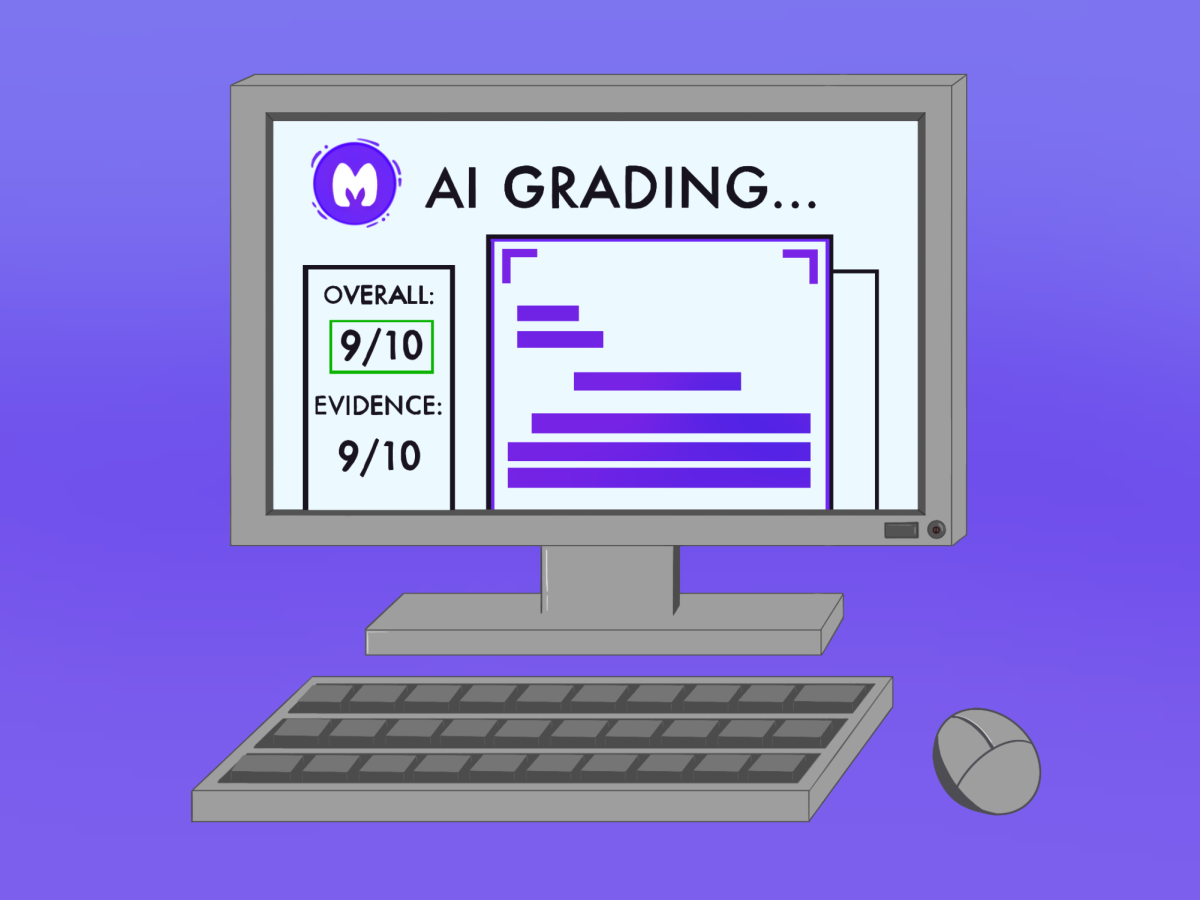
When government teacher Alex Gray was tasked with grading her students’ argumentative essays, she decided to seek a second opinion: an Artificial Intelligence (AI) chatbot.
Using Magic School — an AI platform paid for by the San Mateo Union High School District (SMUSHD), designed to support teachers — Gray inputted rubrics and sample essays from the College Board to train the automated assistant, then uploaded her students’ essays for it to grade.
“The goal of this was really to increase fairness, to try to make sure that I’m grading as fairly and equally as possible,” Gray said.
As more teachers turn to AI, questions have emerged about its accuracy and effectiveness in the classroom. According to a recent survey conducted by Gallup, 60% of teachers used AI during the 2024-2025 school year, with 32% of them consulting the technology on a weekly basis.
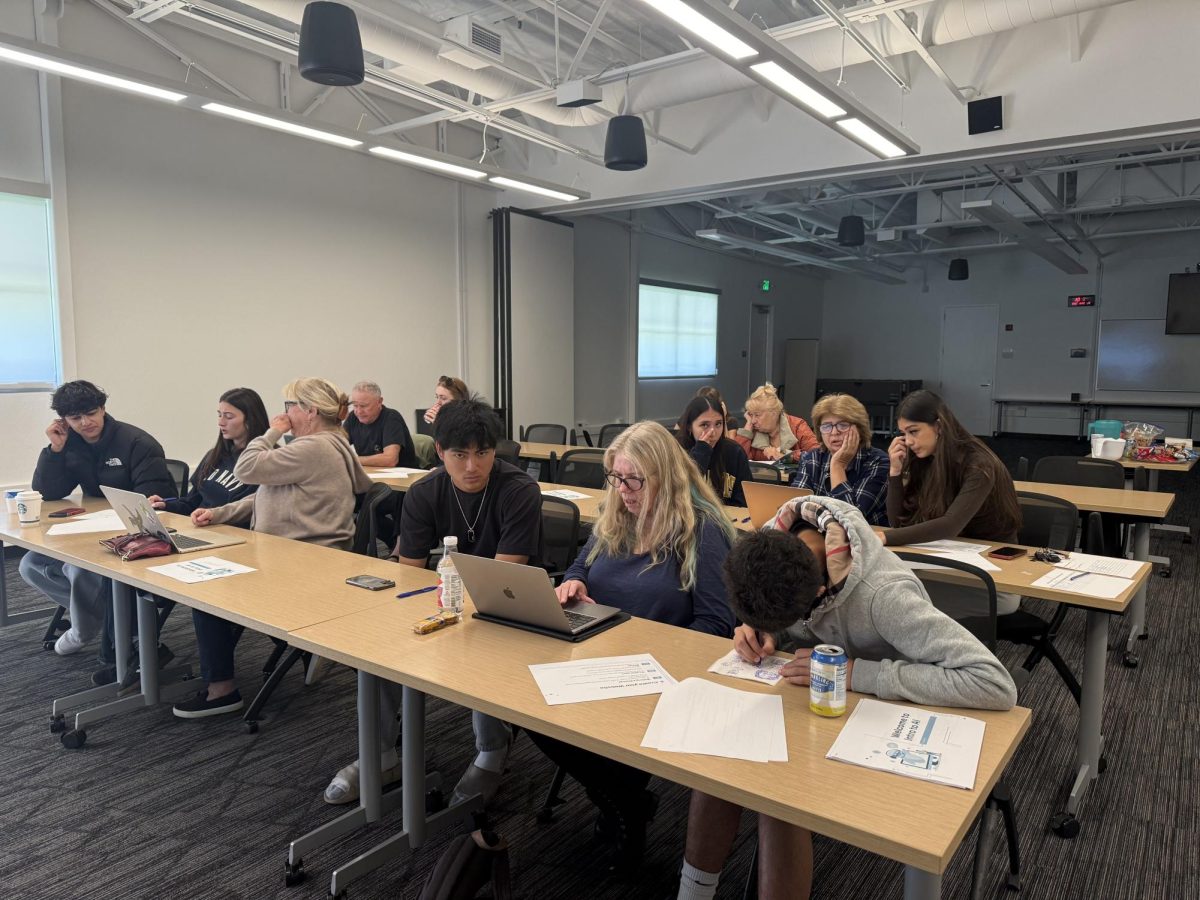
Gray worked alongside other teachers during the grading process. She said they initially graded the students’ work themselves, then compared it with how the AI graded the student, adjusting the chatbot’s settings if it graded too harshly or generously. She also created another chatbot for her students, where they could upload their writing and consult AI for feedback. Gray said the tool was implemented to incentivize students to seek immediate academic support in preparation for their Advanced Placement (AP) exam in May.
“I would love to give them all one-on-one feedback as they’re practicing writing these, like it’s impossible to get enough time with each student. And so that’s one way they’re able to get individualized feedback immediately,” Gray said.
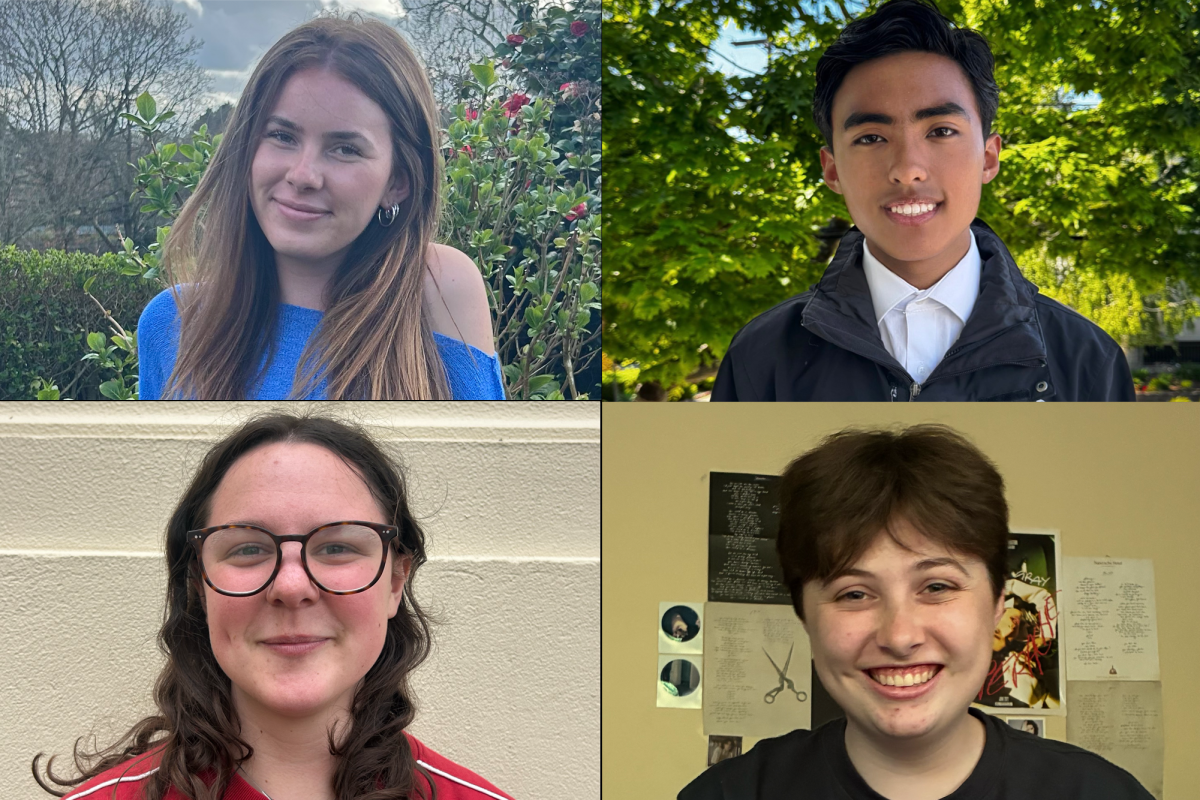
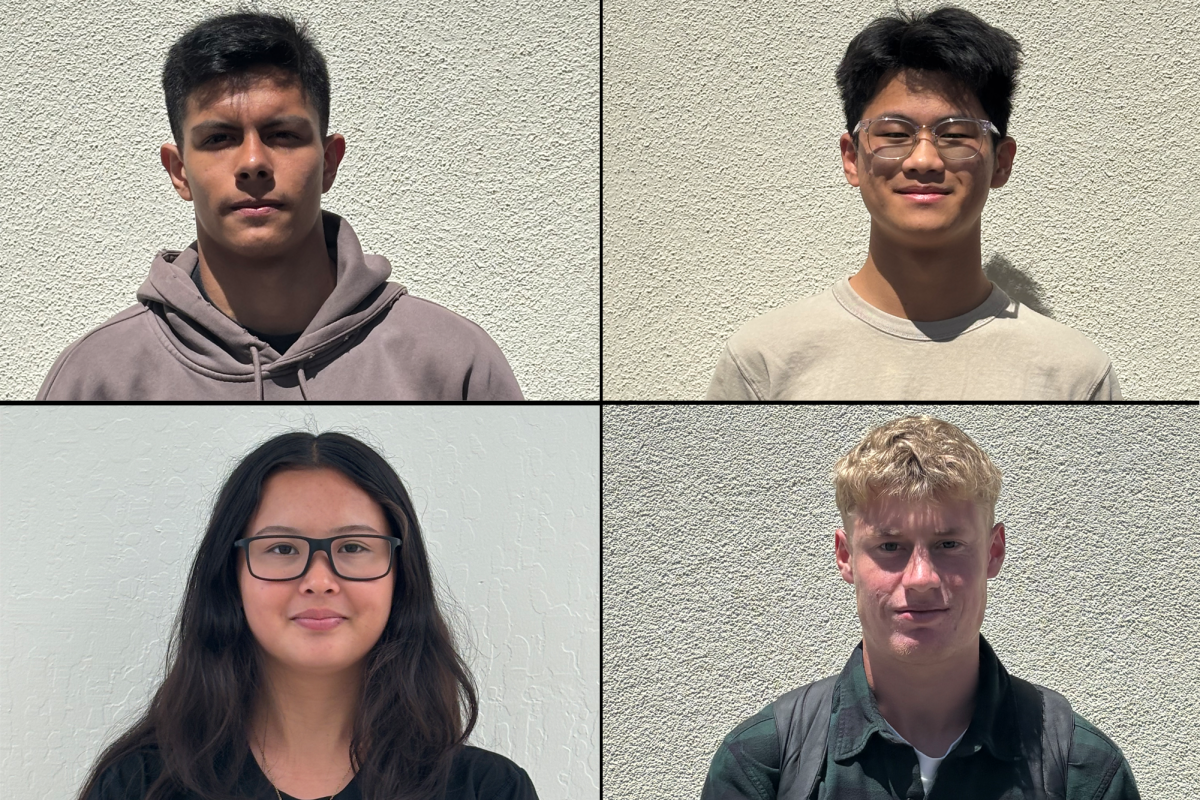
However, some students have expressed concerns over AI’s ability to interpret academic writing. Sophomore Annie Ma, who experienced AI essay grading her freshman year, said AI is a useful tool for teachers, but it struggles to analyze subjective aspects of her writing.
“It doesn’t always understand the context or creativity that students try to incorporate,” Ma said.
Similarly, sophomore Liam Christensen, who has seen teachers integrating AI into their curricula, raised concerns over its tendency to focus on general trends rather than truly understanding students’ writing.
“AIs don’t usually have the ability to grade like teachers do. It’s very different in the fact that AIs are really good at detecting patterns, but they’re not really good at finding a line of reasoning, which is where a lot of teachers grade on,” Christensen said. “If you’re grading an essay, you don’t grade on how nice the words look. It’s the actual thought behind it.”
However, Gray, who used the chatbot as a second opinion, said it was a valuable tool for identifying strengths and weaknesses in each student’s work.
“Sometimes the chatbot would actually find students’ points that I hadn’t noticed, ‘Oh, actually, because of this sentence here in this paragraph, they do get the point,’” Gray said. “I’d be like, ‘Oh, that actually makes a lot of sense, I hadn’t noticed that.’ So running messages to the chatbot as a secondary point of view was very helpful.”
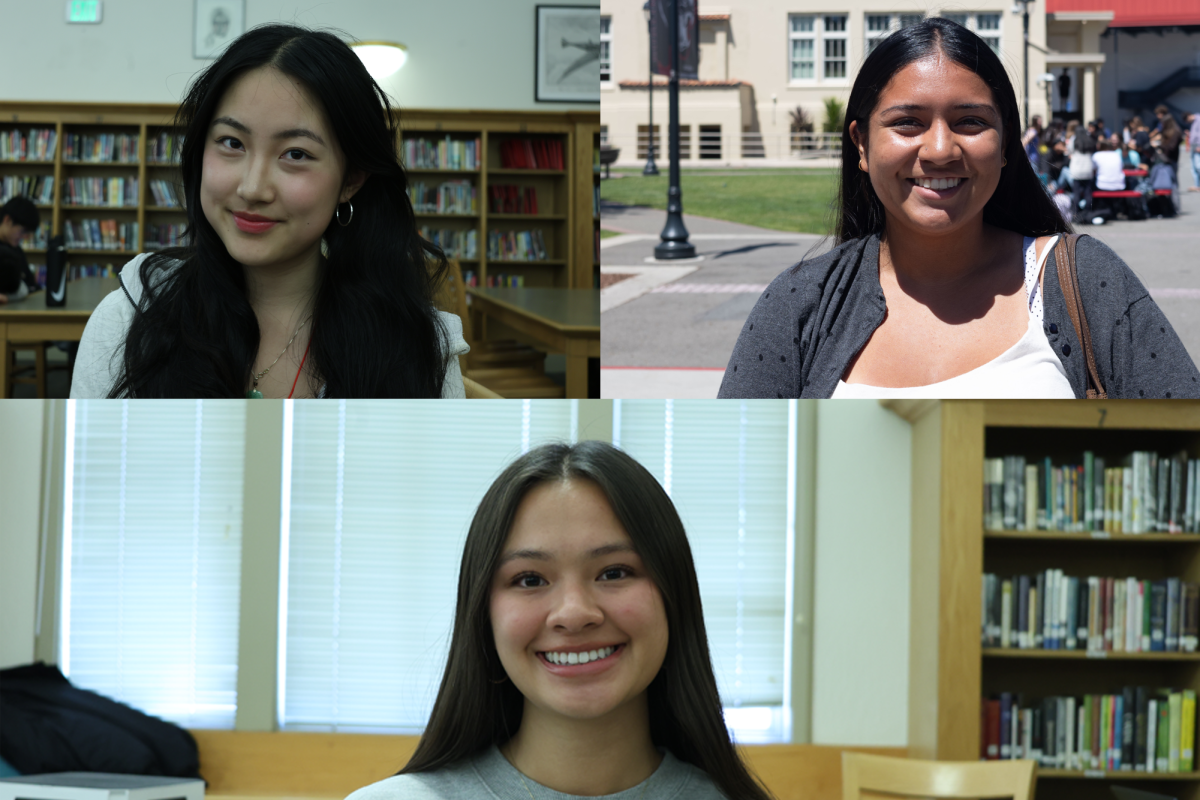
Senior Serena Koopmans, who is the president of the Artificial Intelligence club, said AI comes with both benefits and drawbacks, having recently learned that one of her teachers used AI to grade her work. For Koopmans, transparency between the teacher and student is crucial whenever AI is involved in the classroom.
“The main thing that many students are concerned about is honesty,” Koopmans said. “I think that teachers should definitely disclose at the start of the year and before every assignment, if they’re going to be using AI to grade. And I also think teachers should potentially have the option for students to opt out of that.”
Koopmans also said AI grading could decrease personal interactions between students and teachers. Conversely, she added that the time saved using AI can open up more time for student-teacher interaction.
“I can think back on a few fond memories of when teachers have read my work and talked to me about it in class, and it strengthened our relationship. And so I think that if it’s only AI grading, then it will be harder to have these relationships,” Koopmans said. “But at the same time, if the teacher can spend less time grading mundane assignments and more time actually talking to the students and giving them direct support in class, I think that that could be potentially a good thing.”
To keep the district well-informed about its benefits and consequences, the SMUHSD Board of Trustees approved the Artificial Intelligence (AI) Capstone Program, as well as an AI Fellowship during the Nov. 20 board meeting. The fellowship was designed to give teachers a chance to learn about the ethics of AI in education and how to utilize it in the classroom.
“AI is here to stay, for better or for worse, so I think it’s really important that we all really think about how we can use it in a positive way moving forward,” Gray said. “I don’t think shunning it is the answer, because I think we all need to practice working with it and figure out how we can best use it without resulting in this brain drain that we often see.”