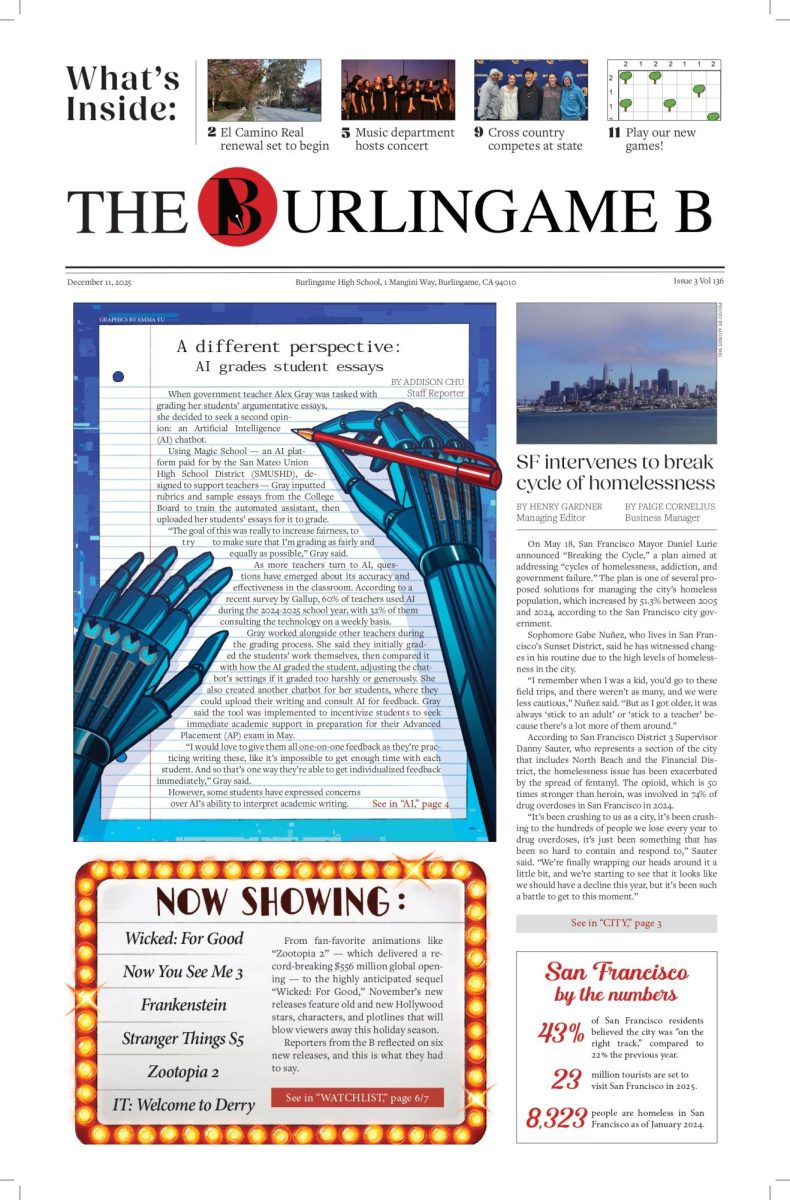















“Zootopia 2,” the second installment in Disney’s Zootopia universe, was released in U.S. theaters on Nov. 25.
The film had the biggest opening box office success in animated movie history, pulling over $550 million in the first weekend alone, nearly quadrupling its budget already. Along with this, the film’s critical response is overwhelmingly positive, with Rotten Tomatoes giving it a 92% score.
“Zootopia 2” features several returning characters, starring Ginnifer Goodwin as Detective Judy Hopps and Jason Bateman as Nick Wilde, the conman-turned-police officer. The movie follows the pair as they hunt down corruption, smugglers, and a wealthy family with ties to the city’s politicians.
I found the plot simple enough for children to understand, but intriguing enough to keep older audiences, like myself, captivated. The story picks up where the first film left off, with Wilde, newly hired by Zootopia’s Police Department, joining Hopps as her partner. It focuses on corruption within the city’s government and the downtrodden reptile population, a historically marginalized group that was mostly pushed out of Zootopia years ago.
The movie shows a noticeable increase in production quality and animation compared with the prequel released nine years prior. I appreciated the distinct and memorable character designs and smooth animation. The backgrounds of shots also remained detailed in each scene, adding to the vibrant theme. Even when shots were focused on the characters, I was drawn to the lively buildings, cityscapes, or nature behind them.
However, this level of detail was no small feat. “Zootopia 2” was a huge project, even by Disney standards. In an interview with Animation Magazine, Director Byron Howard expressed how impressive an undertaking the animation was. He said, “It’s the biggest movie we’ve ever done in the history of Disney Animation, which is saying something. Just the variety of characters, and not just fur but characters with fur and costumes. We’ve got one shot that features 50,000 animals at once.”
The animation team, led by Art Directors Chad Sellers and Kira Lehtomaki, certainly succeeded in making the movie come to life on the big screen. This level of work didn’t come for free; the production budget was reportedly between $150 million and $200 million and took thousands of hours of work from a team of about 700 people over, with more than 300 of them working on animation alone.
The main highlight, especially for the more mature audience, is the subplot. While the movie is lighthearted and family-friendly at the surface level, it holds deeper messages. The film features two police officers from historically oppressed groups in the Zootopia universe, working to earn respect and the same treatment as other officers in the same department. I noticed similarities between Hopps’ and Wilde’s experiences and modern-day struggles concerning racial, gender, and power structures in the workplace, where minority groups are often overlooked for assignments and promotions.
For instance, one assignment Hopps and Wilde take on involves uncovering city corruption and investigating the oppressive practices of a business corporation. Again, the movie is able to use the family-friendly and entertaining plot to highlight how wealthy people exploit their power and connections to oppress minority groups for financial gain.
While “Zootopia 2” is intended for a child audience, it truly shines with subtle but powerful messages that older viewers can pick up on.