

























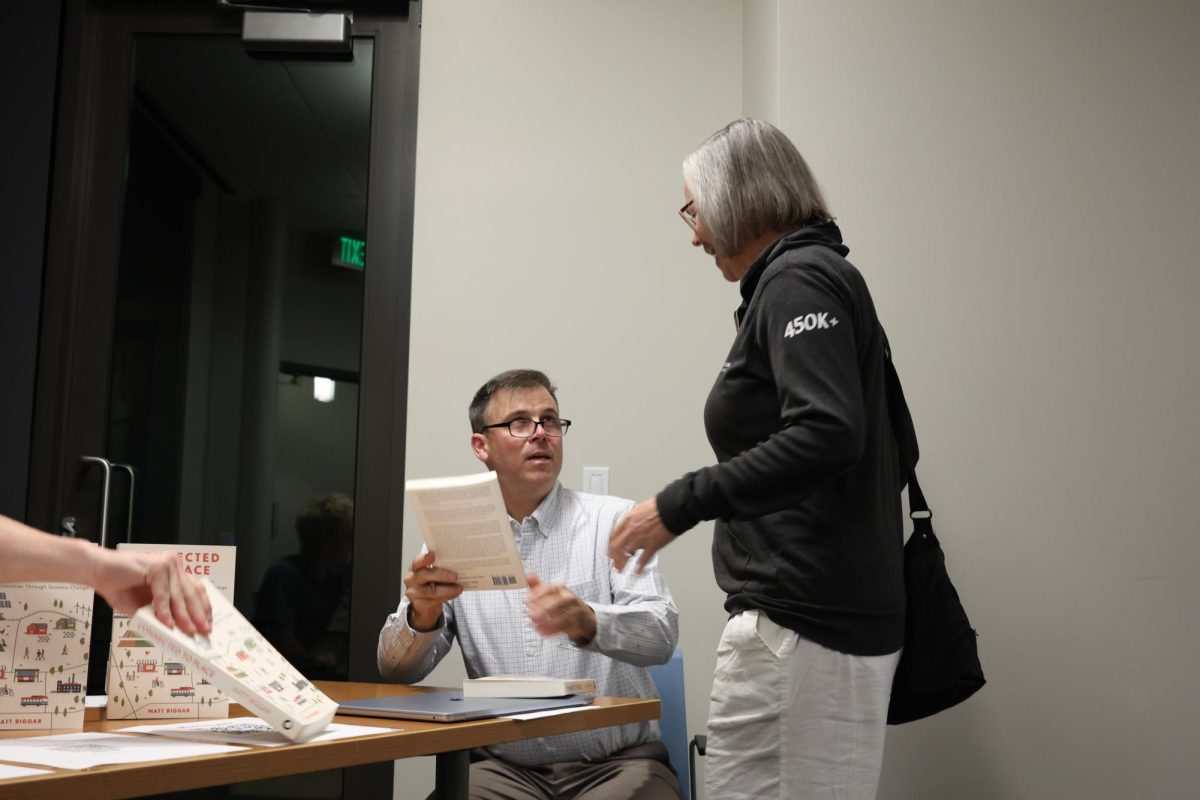
“Systems are certainly cracking in some big ways. Some people would say they are starting to collapse.”
Matt Biggar, former Burlingame principal from 2002-08, delivered those words at his book signing event on Wednesday, Feb. 4. He cited isolating transportation, a lack of community spaces, and environmental damage as examples of systems under pressure and failing to connect people to their surroundings. His book, “Connected to Place,” released on Nov. 15, 2025, focuses on methods to rebuild nature, communities, and local economies to address this lack of connectivity.
“It’s just wanting to understand your place and give back to it and be a part of it. I think it’s very enriching when you can think that way,” Biggar said during an interview.
Biggar also cited overuse of screens as a contributing factor to disconnection from one’s environment. At the book signing, an audience member recalled many kids on their phones at a basketball game. Biggar said the comment made him consider how one can be a participant rather than a spectator.
“The more hands-on you can get with something, the more you can kind of move away from the digital distractions and other things that kind of keep you disconnected,” Biggar said.
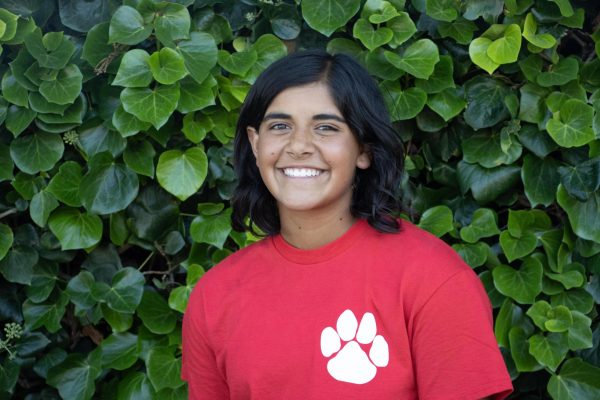
Natalie Dias, a junior at San Mateo High School and panelist at Biggar’s event, echoed this action-oriented approach for youth. Dias works with Silicon Valley Youth Climate Action and Bay Area Youth Climate Summit to promote climate-focused policies.
“In a sense, it can be hard because you don’t have the same voting rights, for example,” Dias said. “But on the other hand, being a youth makes people listen to you more.”
-
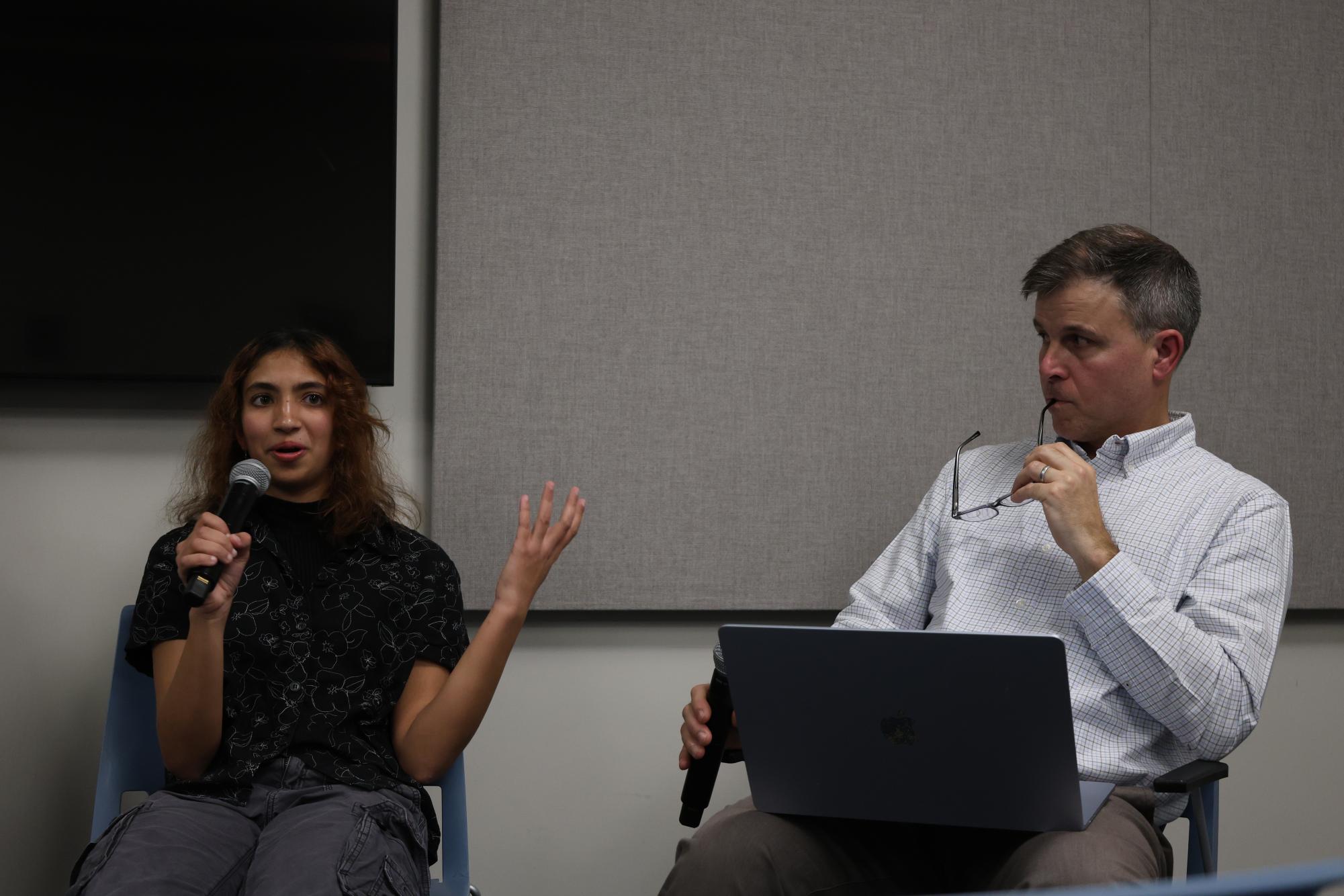
Panelist Natalie Dias talks about her experience in climate policy in San Mateo County.
-
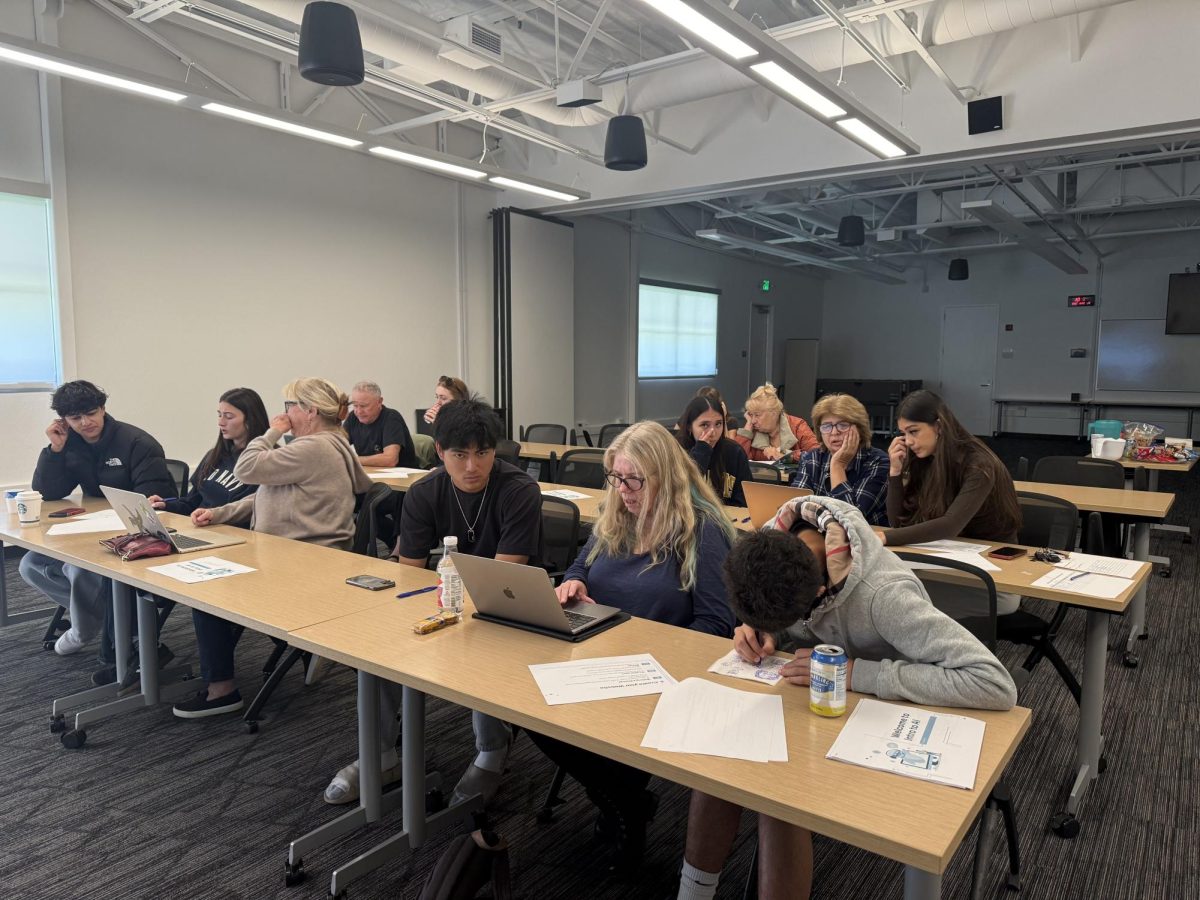
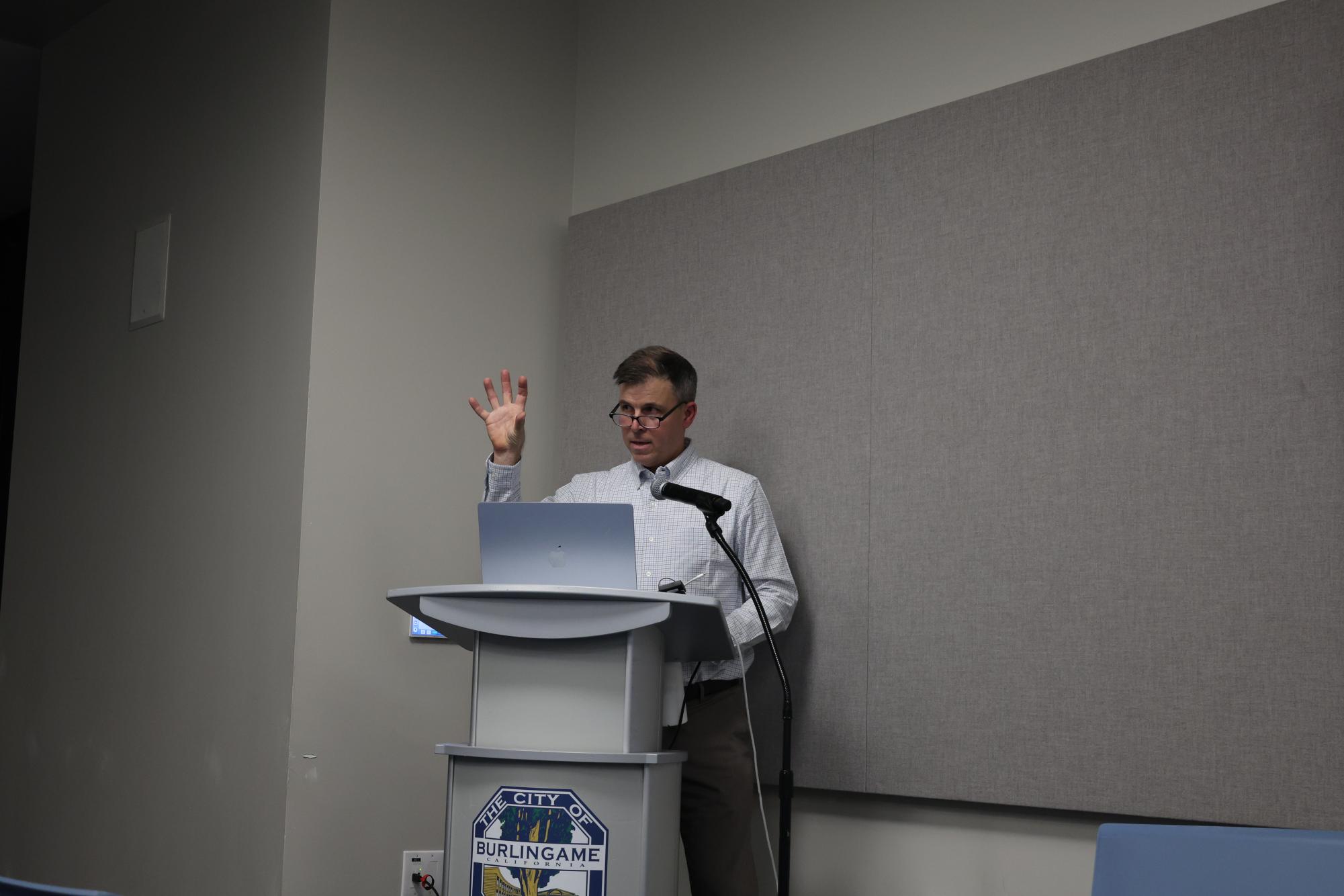
Biggar speaks about connection to place and system change at his book signing event on Wednesday, Feb. 4, at the Burlingame Parks and Recreation Center.
-
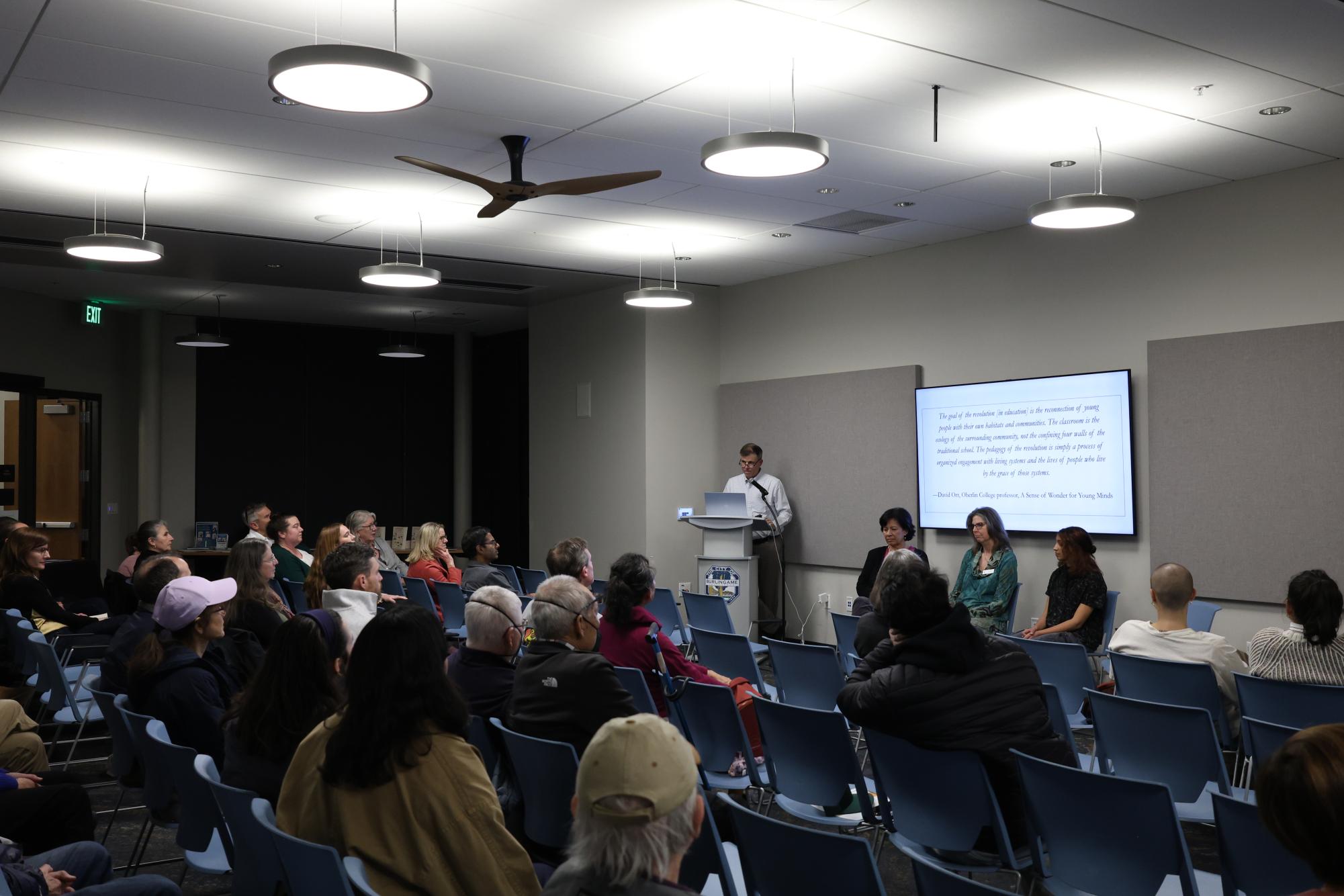
Biggar introduces panelists Julie Hilborn, Natalie Dias, and Theresa Vallez-Kelly to the audience.
Dias said she wished it were easier to get “clearly sustainable” ideas out there. By adopting a community-based approach, she said she has realized what needs to be addressed in her community.
“By learning about what we can do locally, it’s kind of given me more hope for what globally it looks like,” Dias said.
Julie Hilborn, director of Environmental Literacy and Sustainability at the San Mateo County Office of Education, was another panelist at the event. She encouraged students to get involved locally and pay attention to city council decisions.
“[The city council] will decide what kind of city you’re going to have,” Hilborn said. “They choose the zoning for what kinds of buildings are going to go in there, and what kinds of industries, and whether you’re going to have parks or not.”
Biggar closed the event by telling the audience that change will not happen “overnight,” but begins with “planting the seeds for what comes next.”
“It’s who we are, it’s deep in our DNA, and there’s so much richness there, and just to really start thinking about yourself as a person of a place, more than anything, becomes more your identity,” Biggar said. “I think we could make powerful change if enough people do that.”

Natalie Dias • Apr 12, 2026 at 7:07 pm
Thanks for interviewing me Leia! 😀