





























If you’re looking for a comforting romance, this isn’t it.
Based on Emily Brontë’s 1847 novel — originally published under the pen name Ellis Bell — Emerald Fennell’s 2026 adaptation of “Wuthering Heights” doesn’t try to recreate the book word-for-word. However, its themes are just as unsettling and relevant.
To preface, I haven’t read the novel. I walked into the theater knowing nothing about the plot. That disqualifies me from judging its faithfulness to the text, but it also allows me to experience it purely as a film. And as a film, it completely works.
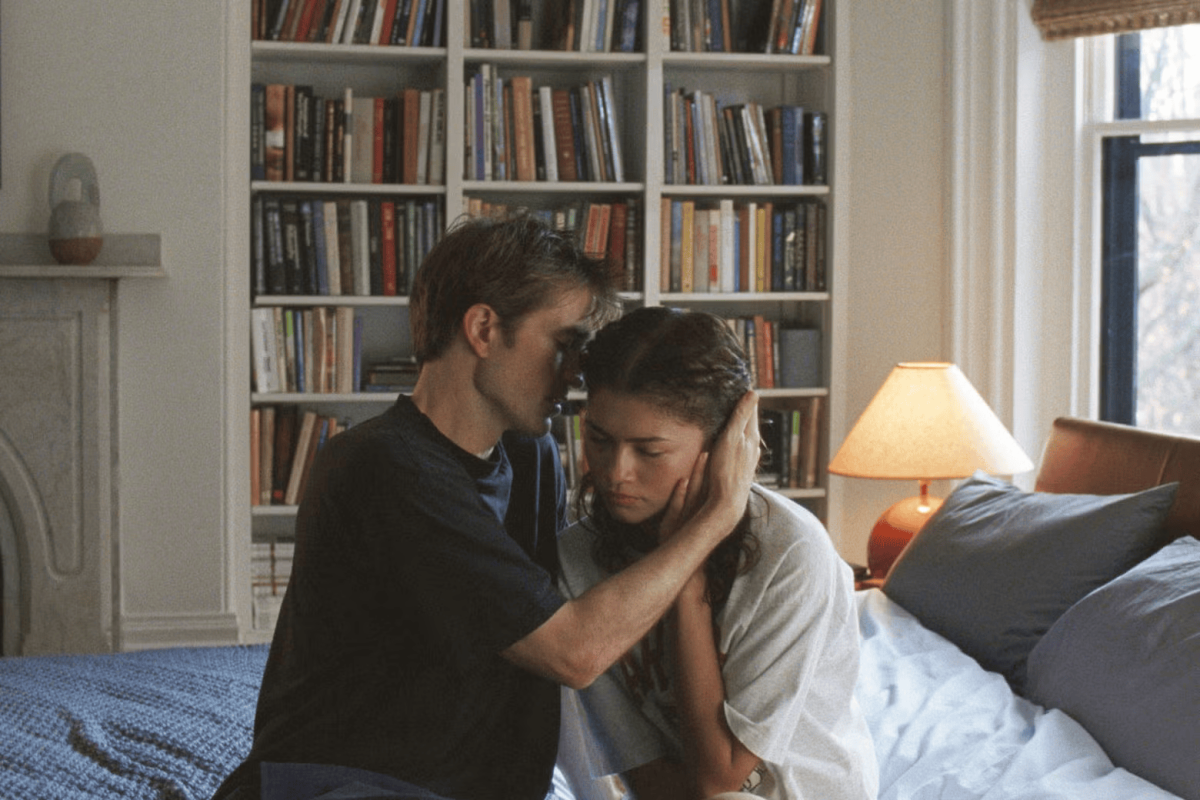
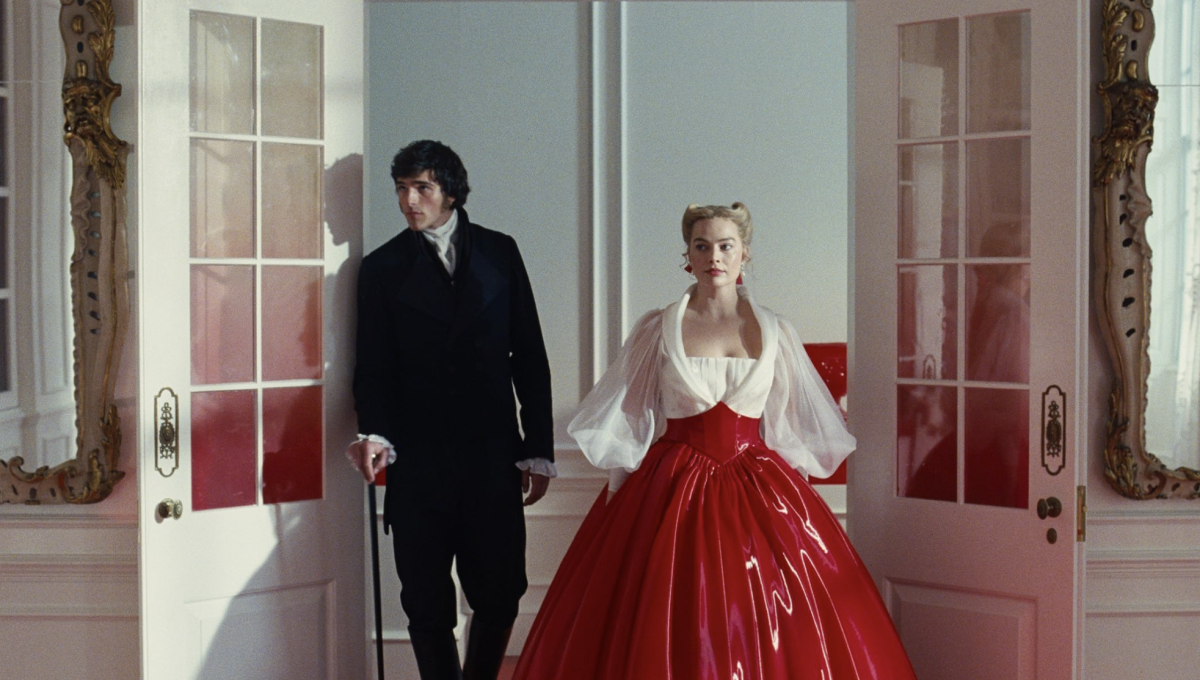
The story follows Jacob Elordi’s portrayal of Heathcliff, an orphan taken in by the Earnshaw family, and his intense bond with Catherine Earnshaw, played by Margot Robbie. As they grow older, love collides with social ambition and pride, and their relationship slowly deteriorates under the weight of class expectations and ego.
Online criticism has already noted differences between the movie and the novel. Some viewers revisited the book’s description of Heathcliff as “dark-skinned,” debating whether Jacob Elordi was right for the role and whether the adaptation fully engages with the racial and social tension embedded in the text.
While I agree this element carries weight, visually, the film reinforces the social divide in other powerful ways. The contrast between the raw isolation of Wuthering Heights and the polished elegance of Thrushcross Grange makes the class tension impossible to ignore. Costume design also subtly tracks Catherine’s transformation into someone who fits upper-class expectations.
Other viewers have criticized the film for oversexualization. I understand where that reaction comes from; the physical intensity between Heathcliff and Catherine is heightened. However, I don’t believe it is gratuitous. Softening it wouldn’t capture the obsessive and toxic nature of their relationship. Their love isn’t meant to be gentle, and the discomfort viewers may feel mirrors the emotional extremity of their bond.
Yet, among all the factors, what surprised me most was how depressing the film is. Every decision is fueled by pride, ego, insecurity, and social pressure. The audience can identify the characters making choices that push them further apart, and there is this constant feeling that everything could have been different if someone had swallowed their pride sooner. The message feels painfully clear: love doesn’t always fail because it is weak, but because people realize what they’ve lost too late.
Despite that heaviness, the film never felt slow. The pacing was sharp and emotionally charged. The flashbacks to childhood provided context, making the eventual destruction even more heartbreaking without dragging out the story.
One of the boldest choices is the soundtrack. The inclusion of a full Charli XCX album created for the film adds a modern pulse that some traditionalists might find jarring. I found it brilliant, as the music doesn’t modernize the story but rather amplifies the emotional chaos and feelings Brontë first wrote about in the 1800s, timeless.
Nearly 180 years after Brontë first published Wuthering Heights, this adaptation shows why the story endures. It’s romantic, depressing, and beautiful all at once. Sometimes, that’s far more memorable than a love story that ends happily ever after.