
































-
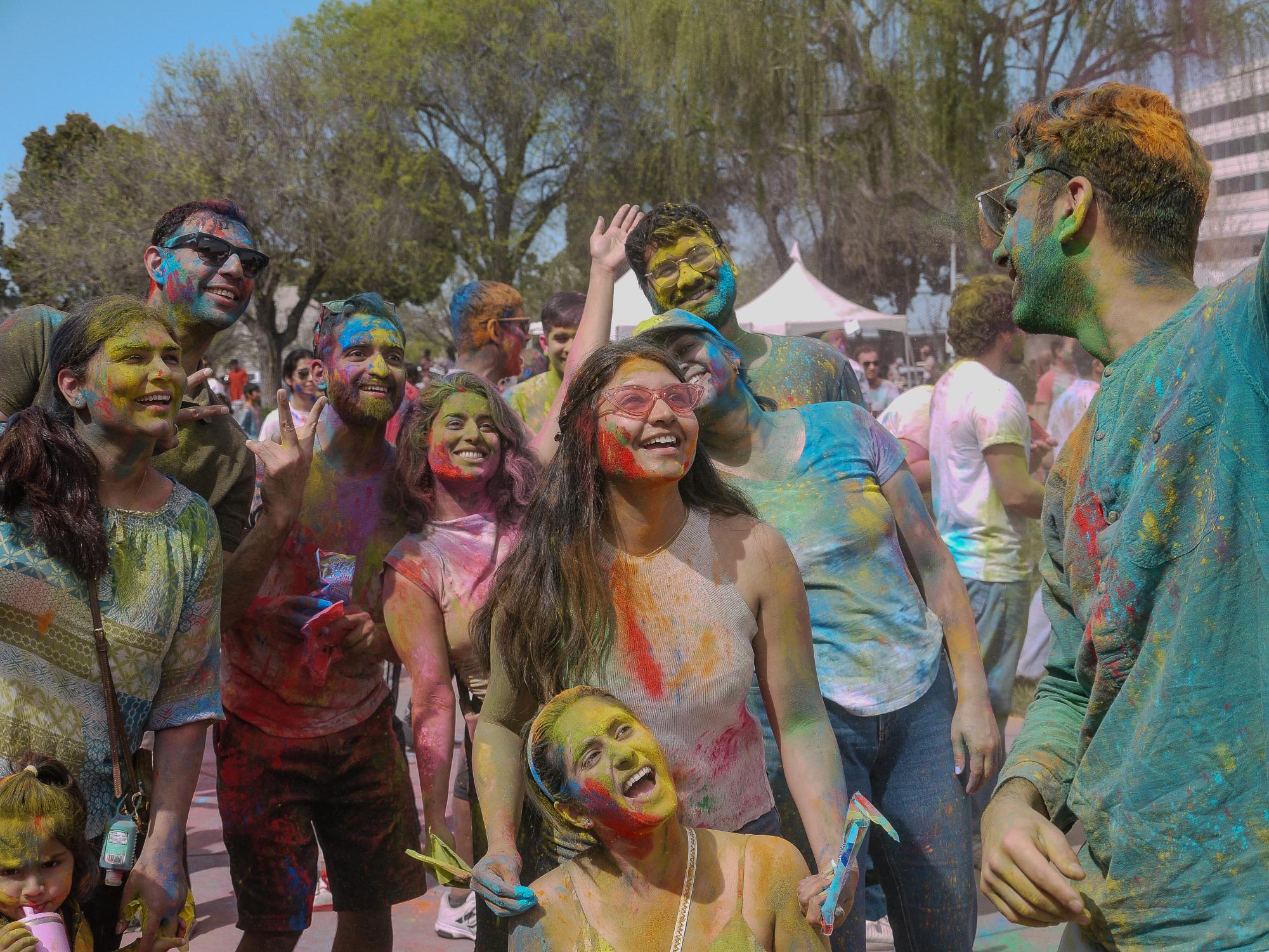
Gulal-covered attendees gather for a selfie during the festival. One important aspect of Holi is celebrating with family and friends as they welcome the spring season.
-
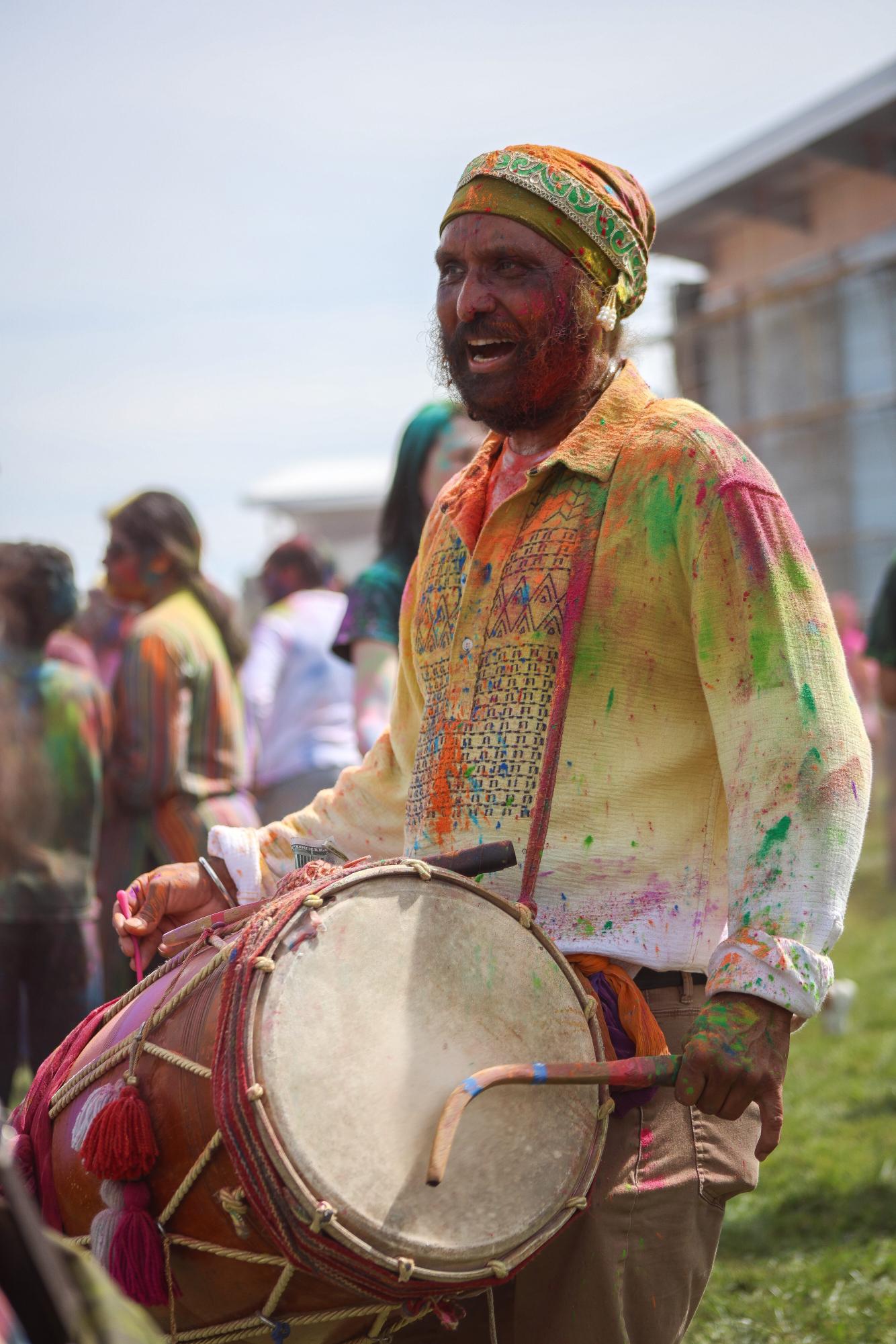
A drummer plays the traditional dhol, driving the energy of the crowd and encouraging spirited dancing. The rhythm of the dhol reflects on the festival’s theme of unity, renewal, and the celebration of spring.
-
The exact date of Holi changes year to year. This year, it began in the evening on Tuesday, March 3, and concluded on Wednesday, March 4. The holiday is based on the full moon in the month of Phalguna, which is a part of the Hindu lunar calendar. On the Gregorian calendar, Holi typically begins in late February or March.
-
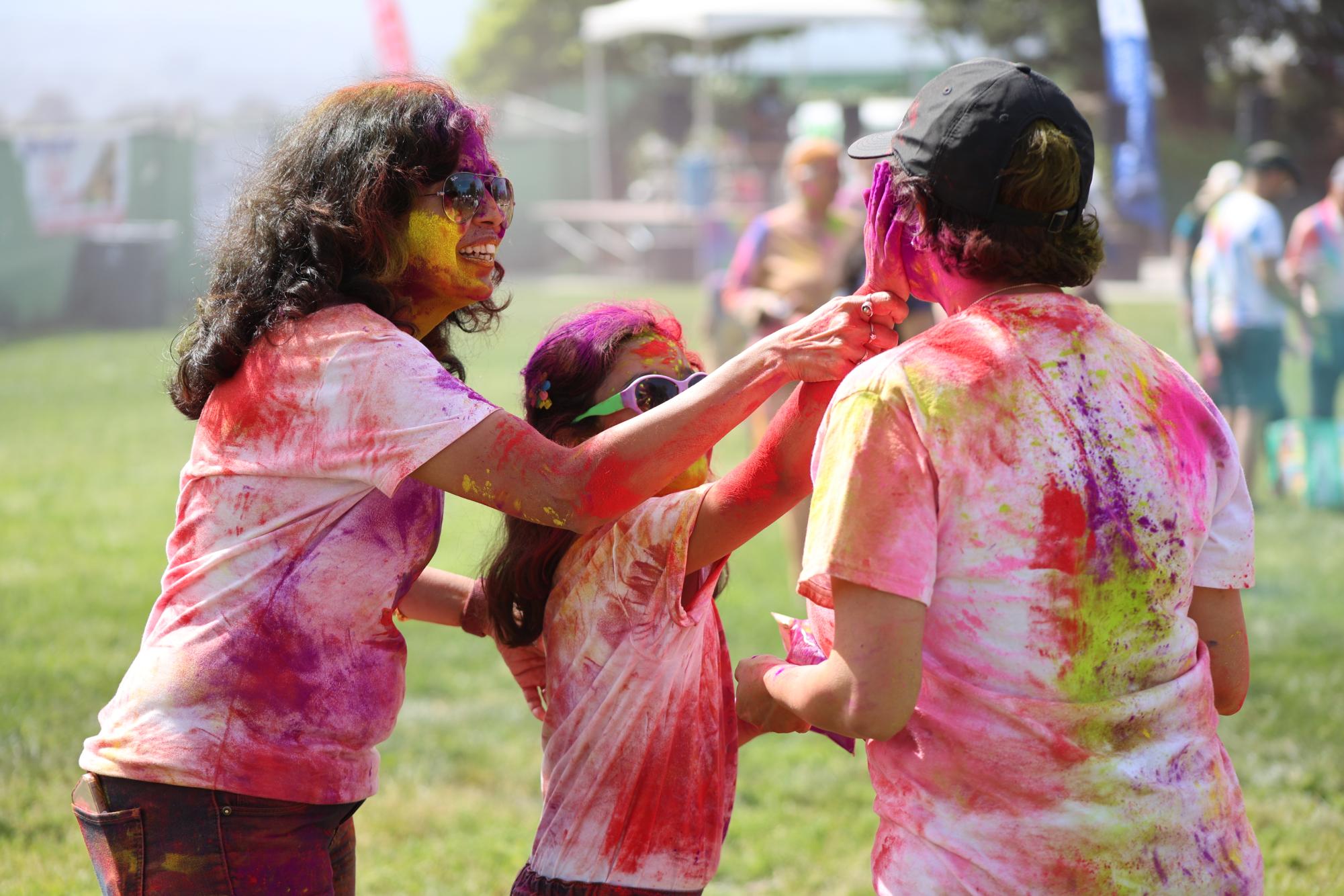
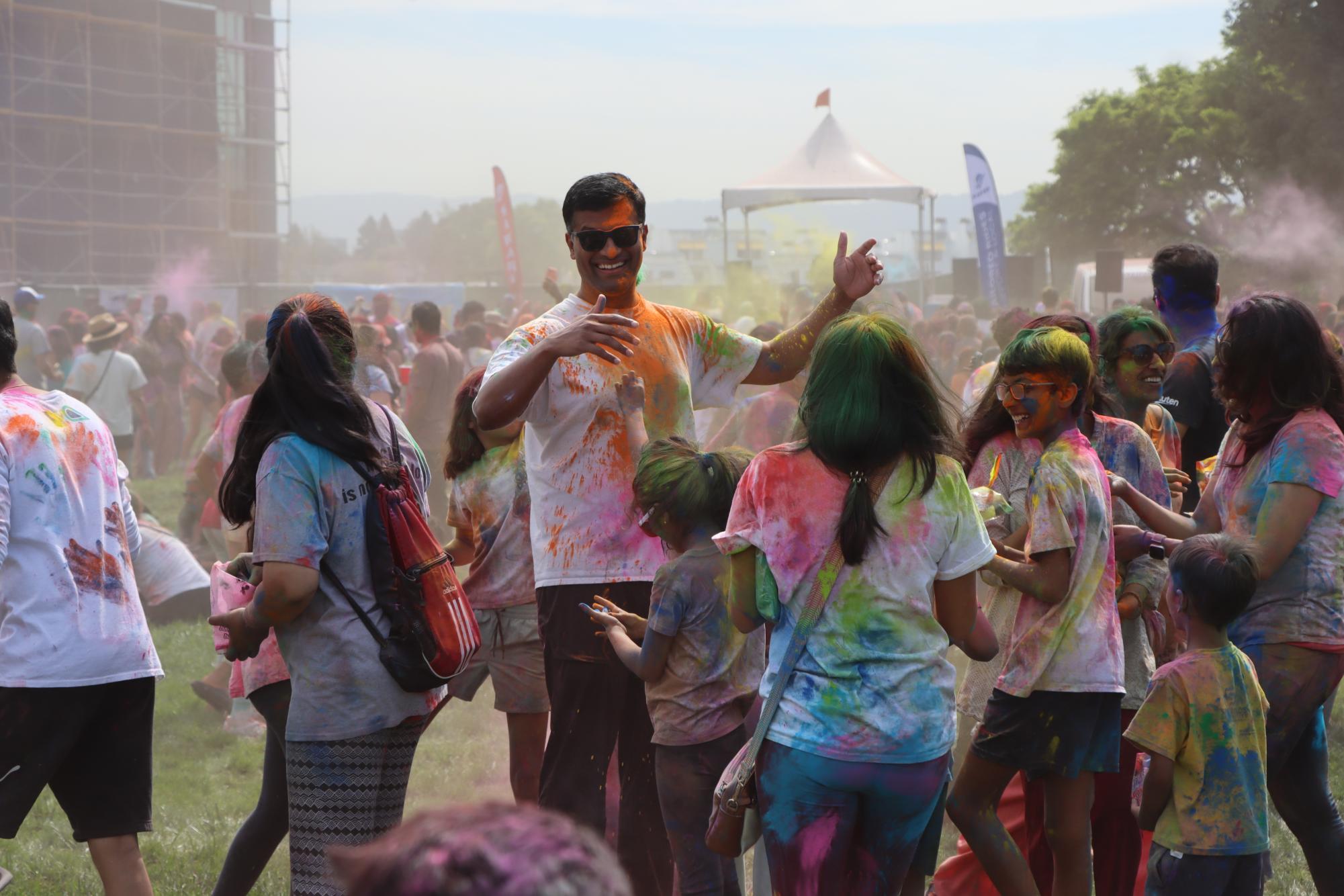
A mother and daughter smear gulal on a fellow attendee. The event historically brings family, friends, and lovers together for a day of festivities.
-
In Hinduism, the colors of Holi represent different emotions, elements of nature, and divinity. For instance, blue is associated with the divine Krishna, while green symbolizes the rejuvenation of life and the onset of spring. Red represents love and fertility, and yellow symbolizes prosperity and new beginnings.
-
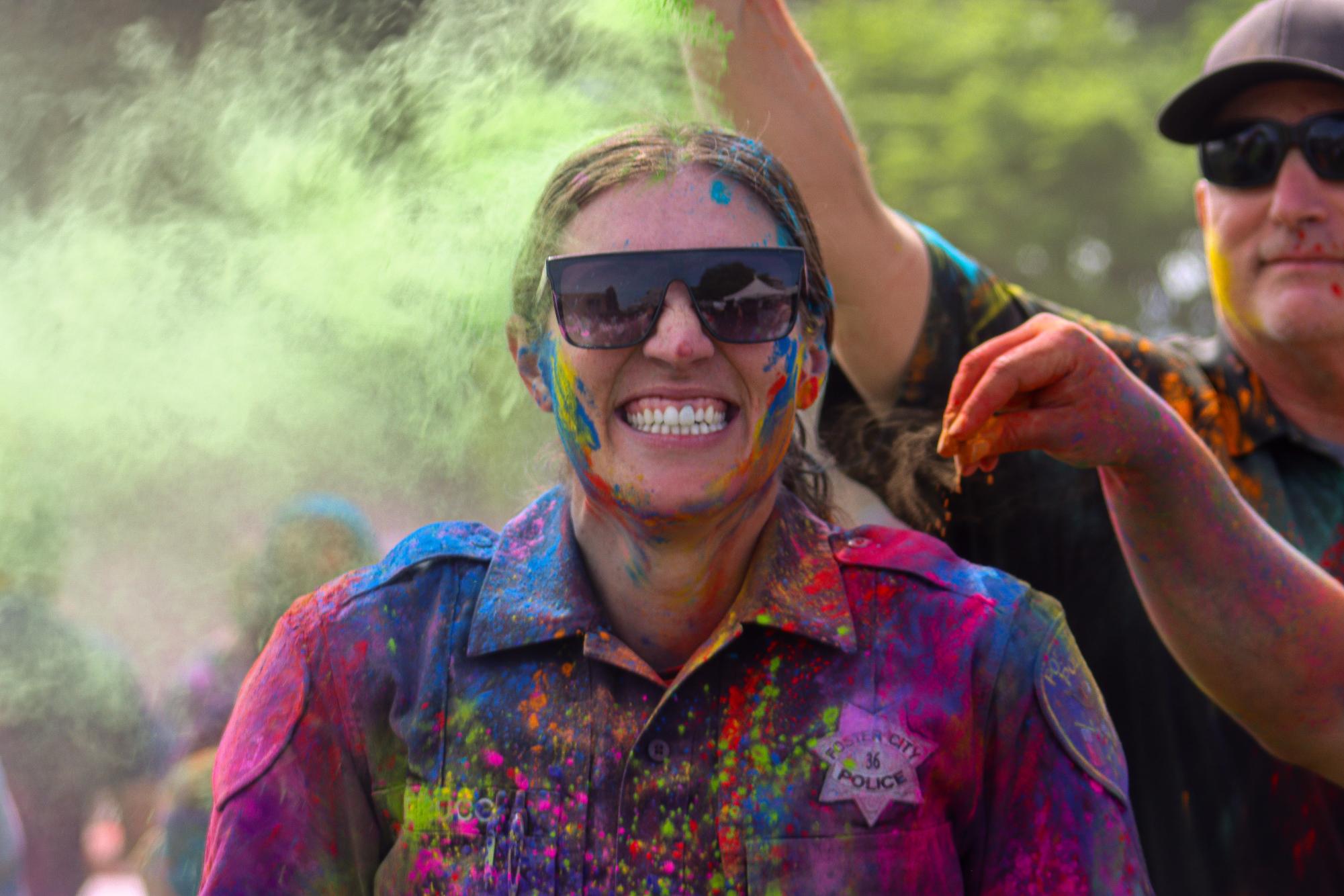
Police Officer Victoria Pierucci, who grew up in Foster City, highlighted the city’s multicultural community as one of her favorite aspects of the festival. “I actually love celebrating all different cultures. I think that’s one of the beautiful things about Foster City, is we have a lot of different cultures here,” Pierucci said. “Like I said, I grew up here. This is my hometown, and I think it’s really awesome for us to just come out here and all celebrate together and just be a big community.”
-
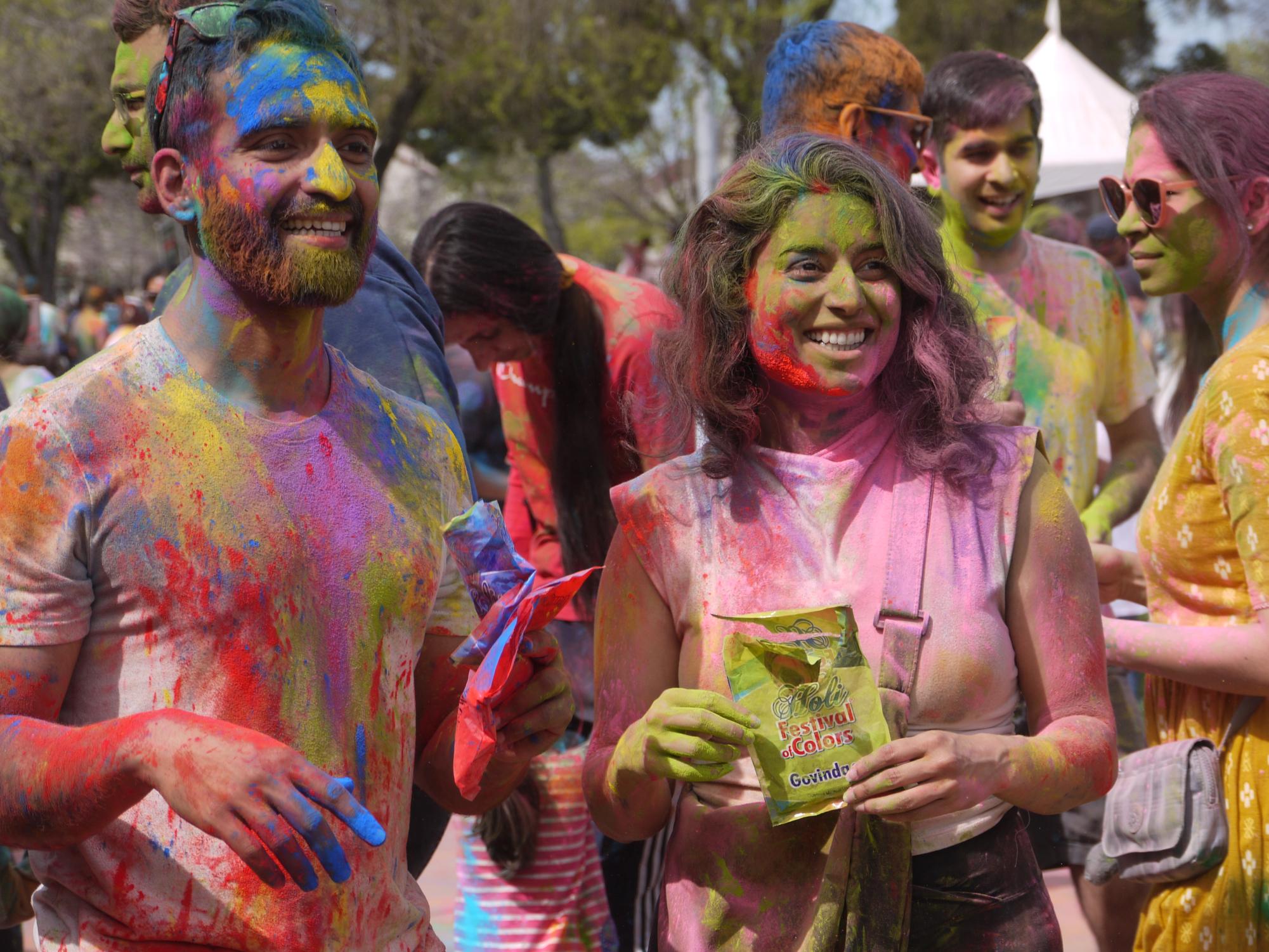
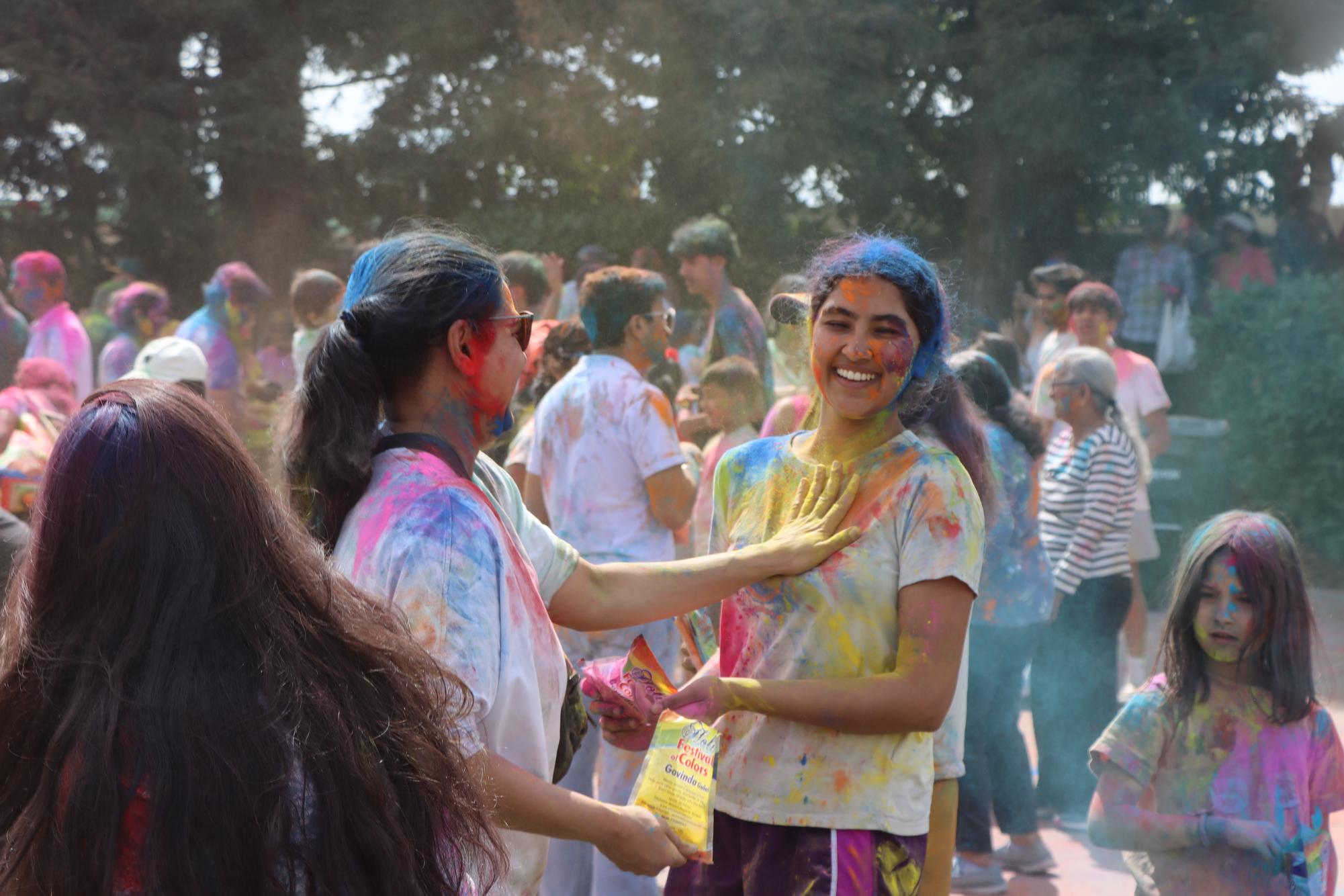
Smiles spread across faces as the celebration continues, welcoming the arrival of spring. Attendees smear various bright colors on fellow community members of all ages.
-
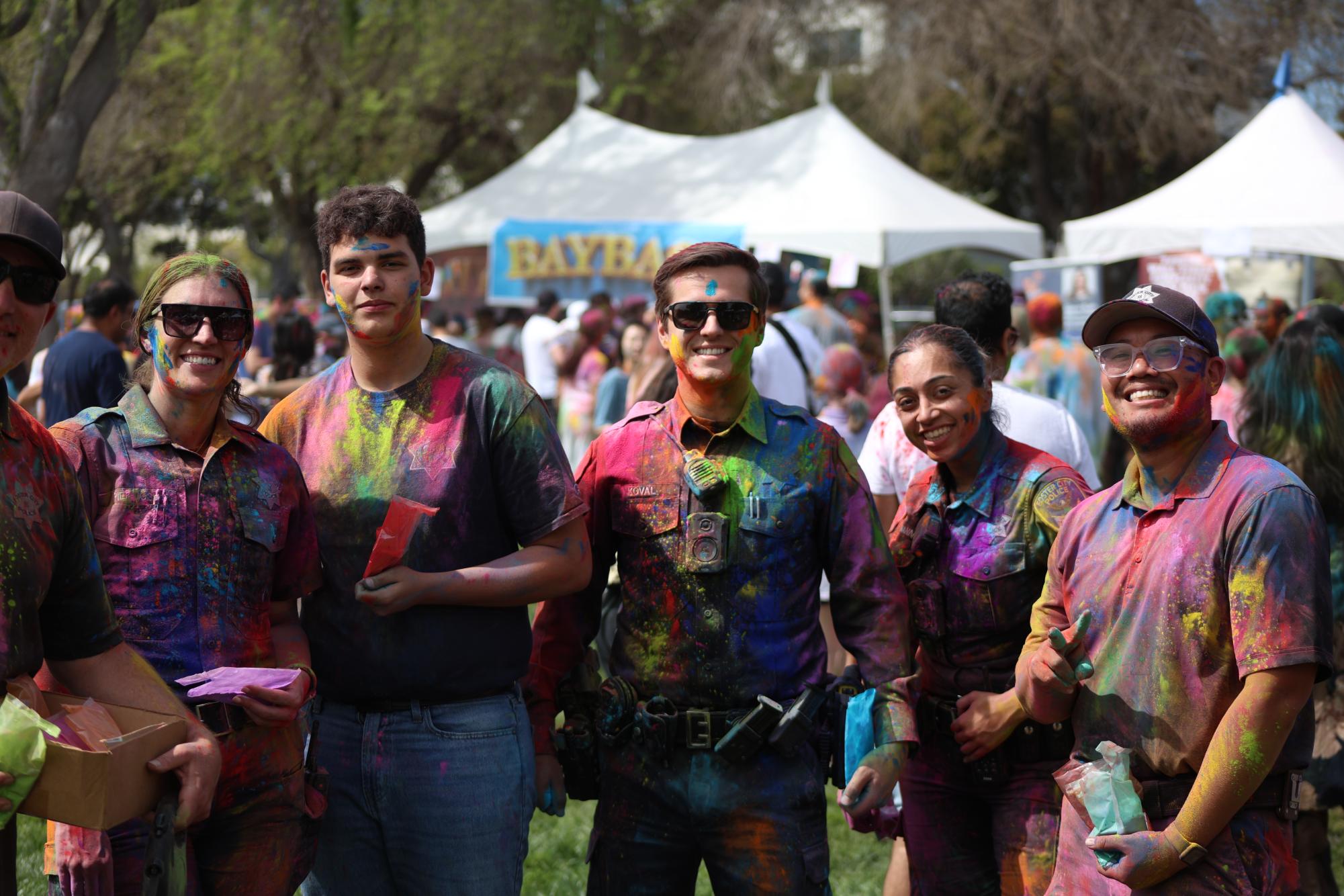
Police officers from the Foster City Police Department joined in the festivities, representing the department’s community outreach program. The officers smile after getting smeared in various vibrant colors.
-
Holi not only celebrates the love of Radha and Krishna, but also represents the victory of good over evil. A well-known tale about a king and his son symbolizes this theme central to the holiday. Hiranyakashipu, an arrogant and powerful demon king, conspired with his sister, Holika, to burn his son Prahlad alive because Prahlad went against his father’s wishes. As a result of divine intervention, Prahlad remained alive while Holika burned away in flames.
-
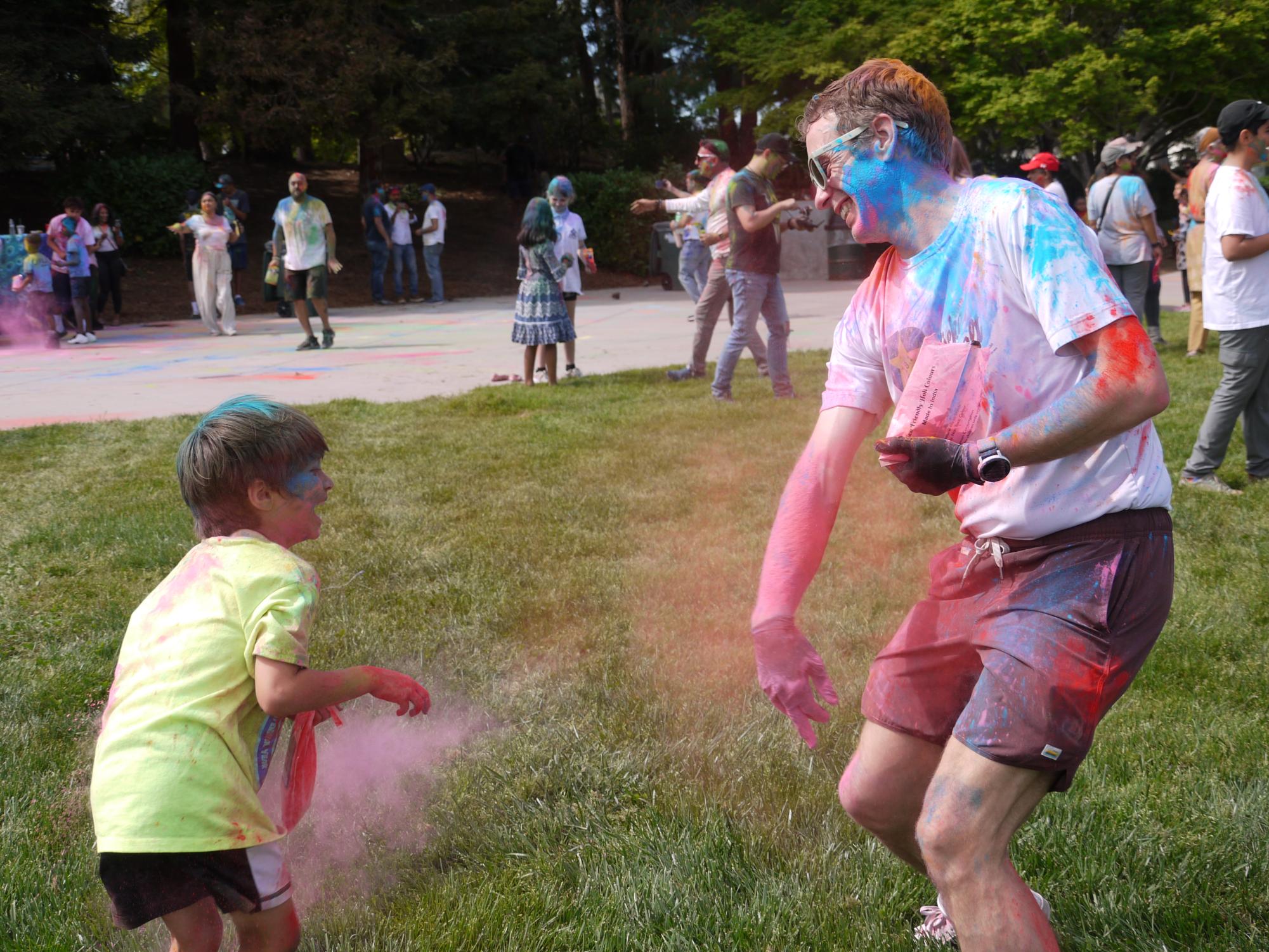
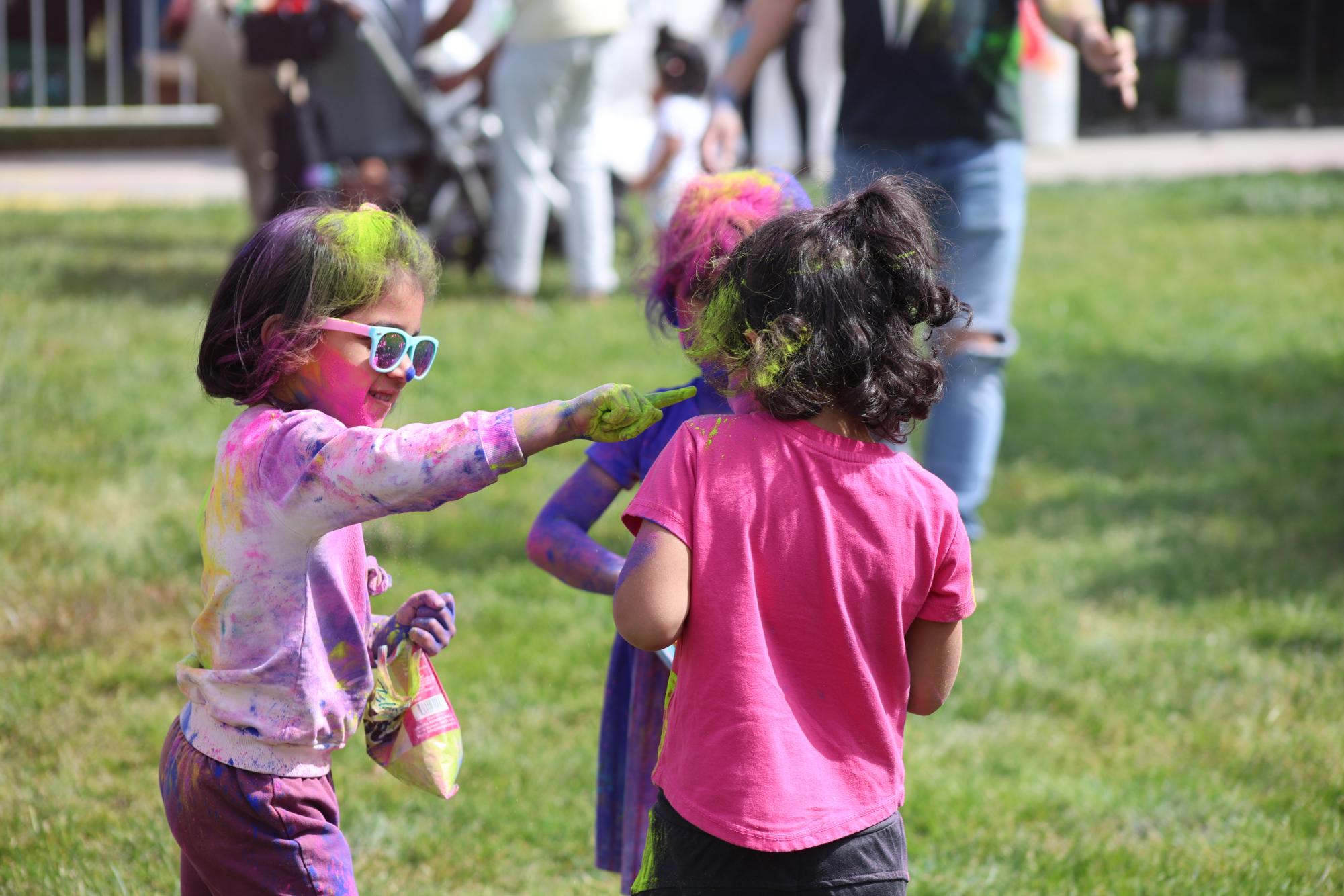
A group of children smear colors on each other. The act represents a sense of unity and the change of seasons.
-
Manjira Datta, a member of the board of BayBasi, Inc., the organization behind the Holi festival, said the celebration is “something that brings everybody, different cultures together. It’s like a cultural salad bowl, and it’s beautiful. It is. I mean, that is the purpose I feel of any festival is to bring people together.”
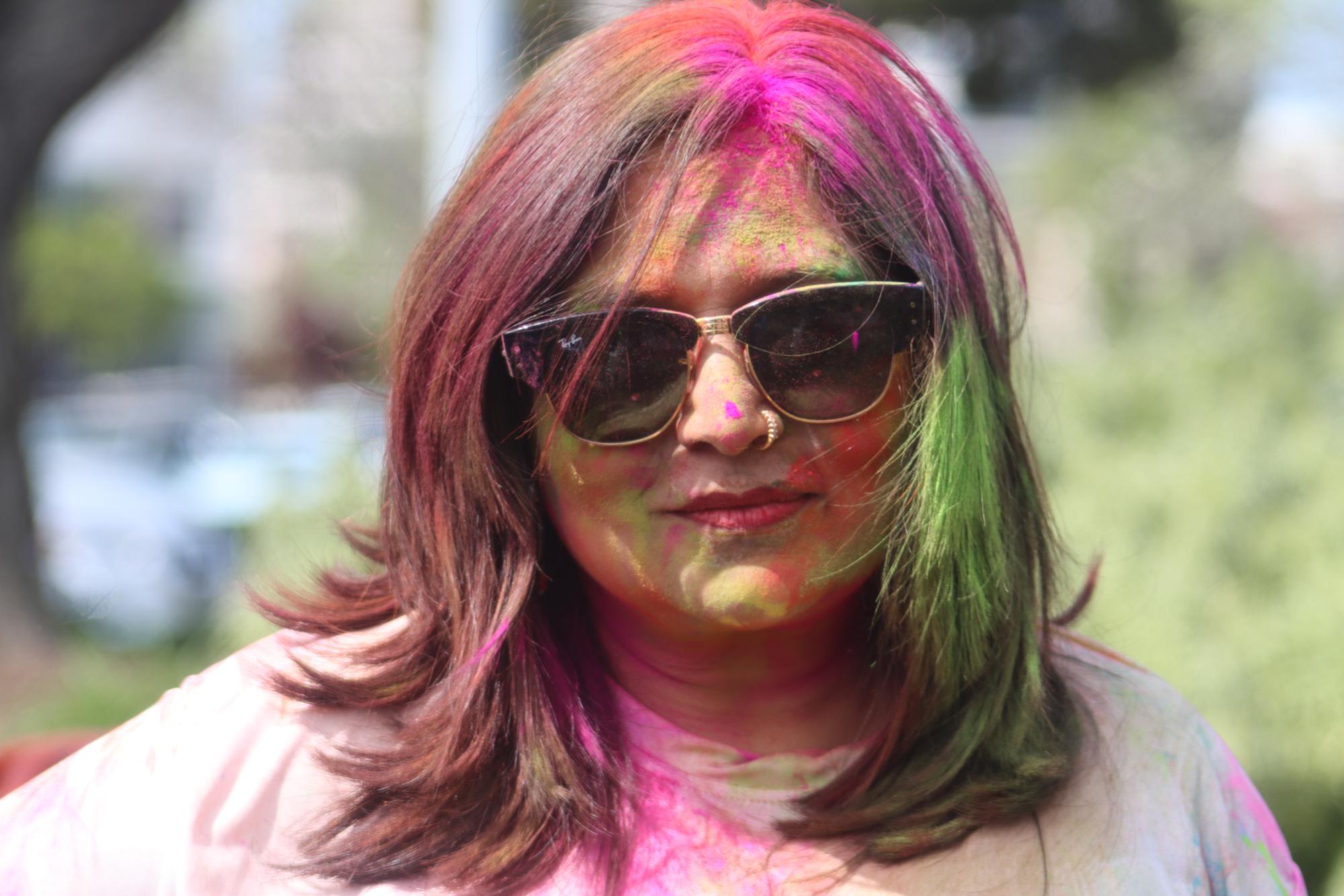
On Saturday, March 21, The B attended the 2026 Holi Festival in Leo J. Bryan Park in Foster City, hosted by Baybasi, Inc., a Foster City-based nonprofit that organizes art and music events celebrating various Indian cultures.
Known as the “Festival of Colors,” Holi is a two-day Hindu holiday that celebrates the arrival of spring and the triumph of good over evil, based on the mythological love between the divine couple Krishna and Radha.
The holiday is typically celebrated by lighting bonfires on the first night, known as Holika Dahan. People dance and sing around the bonfires, honoring the triumph of righteousness. Objects like grain, wood, and leaves are thrown in to welcome the new season and release negativity.
The second day, Rangwali Holi, includes tossing and smearing colorful gulal, spraying water, and enjoying traditional foods and drinks like thandai (cold spiced milk) and gujiya (fried pastry filled with sweet stuffing).