




































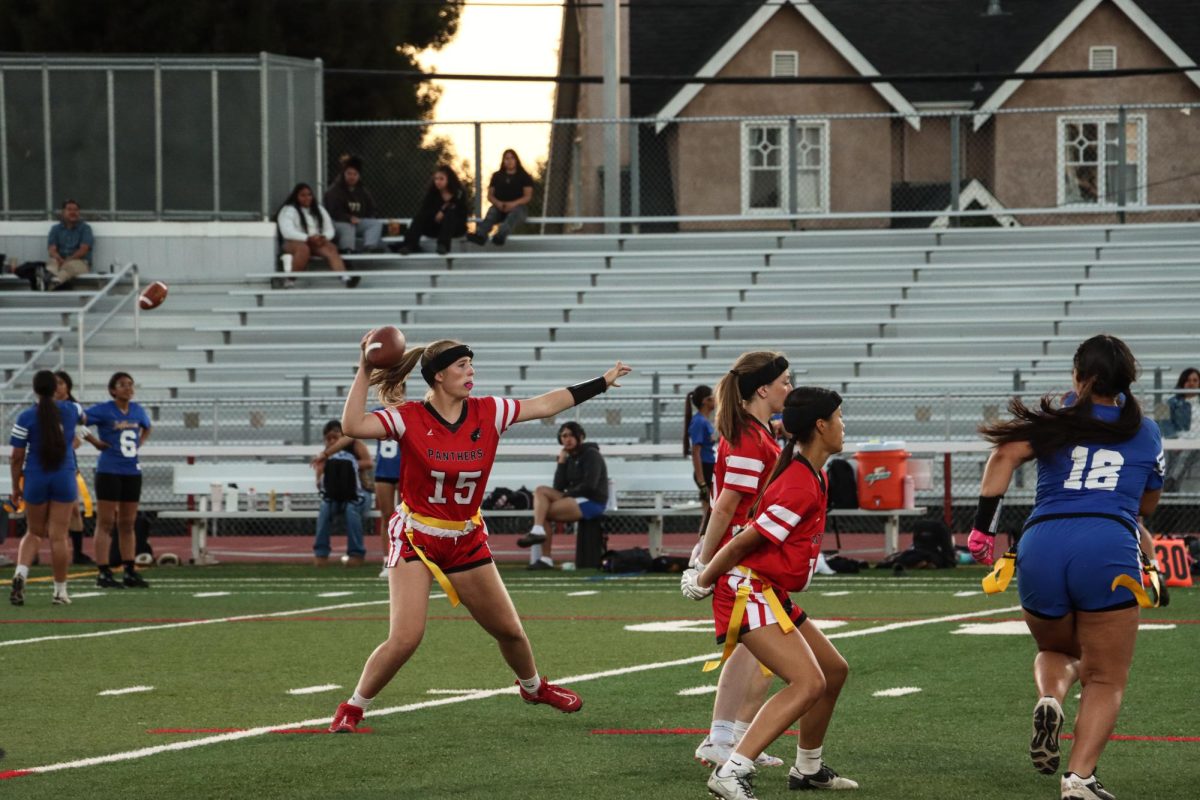
In 2022, 474,000 girls played flag football in the United States, a 63 percent increase from 2019. Girls’ flag football has expanded rapidly at the high school level, with 17 states already sanctioning the sport.
In response to growing popularity, on Jan. 16, the National Collegiate Athletic Association (NCAA) added women’s flag football to the Emerging Sports Program for Women, which helps developing sports reach championship status through funding and visibility. This program helps legitimize developing sports before being sanctioned as an NCAA championship sport.
Locally, the Peninsula Athletic League (PAL) added flag football as a high school sport in 2023. Additionally, club organizations such as Next Play have expanded opportunities across the Peninsula.
“It’s another sport people can play farther than high school, and that’s really good for women’s sports,” freshman and flag football player Peyton Igushi said.
To become an NCAA championship sport, 40 universities must sponsor a team and fulfill other prerequisites for competition, including budget approvals by the NCAA Committee on Access, Opportunity, and Impact. Once those requirements are met, the committee can graduate the sport from the Emerging Sports Program.
So far, the Division I, II, and III levels have already proposed formats for the season. The NCAA estimates more than 60 schools will add flag football to their roster of school sports by spring 2026.
“The speed with which flag football has grown around here is pretty amazing, and I’m just happy for women to have yet another sport where they have an opportunity to play,” junior varsity flag football coach Denise Burch said.
Junior Cailyn Lish said the sport will help women receive scholarships to play in professional athletics.
“It’s an amazing opportunity for many young women to just be allowed to experience flag football, getting scholarships for flag football, and being passionate in a sport that they couldn’t play a couple of years ago,” Lish said.
Especially in California, flag football has been rapidly growing. The Central Coast Section (CCS) added a playoff division for girls’ flag football in 2025, giving high schoolers the chance to compete regionally.
“Our varsity team wound up playing the San Mateo varsity team CCS championship game right before the Little Big Game,” Burch said. “So really couldn’t write a better story. It was awesome.”
Alongside these efforts, the National Football League (NFL) endorsed several flag football programs to empower girls. Most notably, the annual “Toyota Glow Up Classic” during Super Bowl week selects high schoolers to play flag football in a glow-in-the-dark setting, mentored by NFL stars such as starting quarterback Brock Purdy. The San Francisco 49ers also launched initiatives such as “Football is Made for Girls,” a program that hosts clinics for over a thousand players and provides flag football equipment.
The sport will also join the 2028 Olympics lineup, marking a shift internationally as it joins other popular summer sports. Burch said she feels appreciative that flag football will reach a global audience.
“It’s going to be awesome to see it become more common, like soccer, like softball, like volleyball, when girls can start to play flag from a really young age and develop that talent early and then get into play for the high school, play for college, potentially play pro,” Burch said.